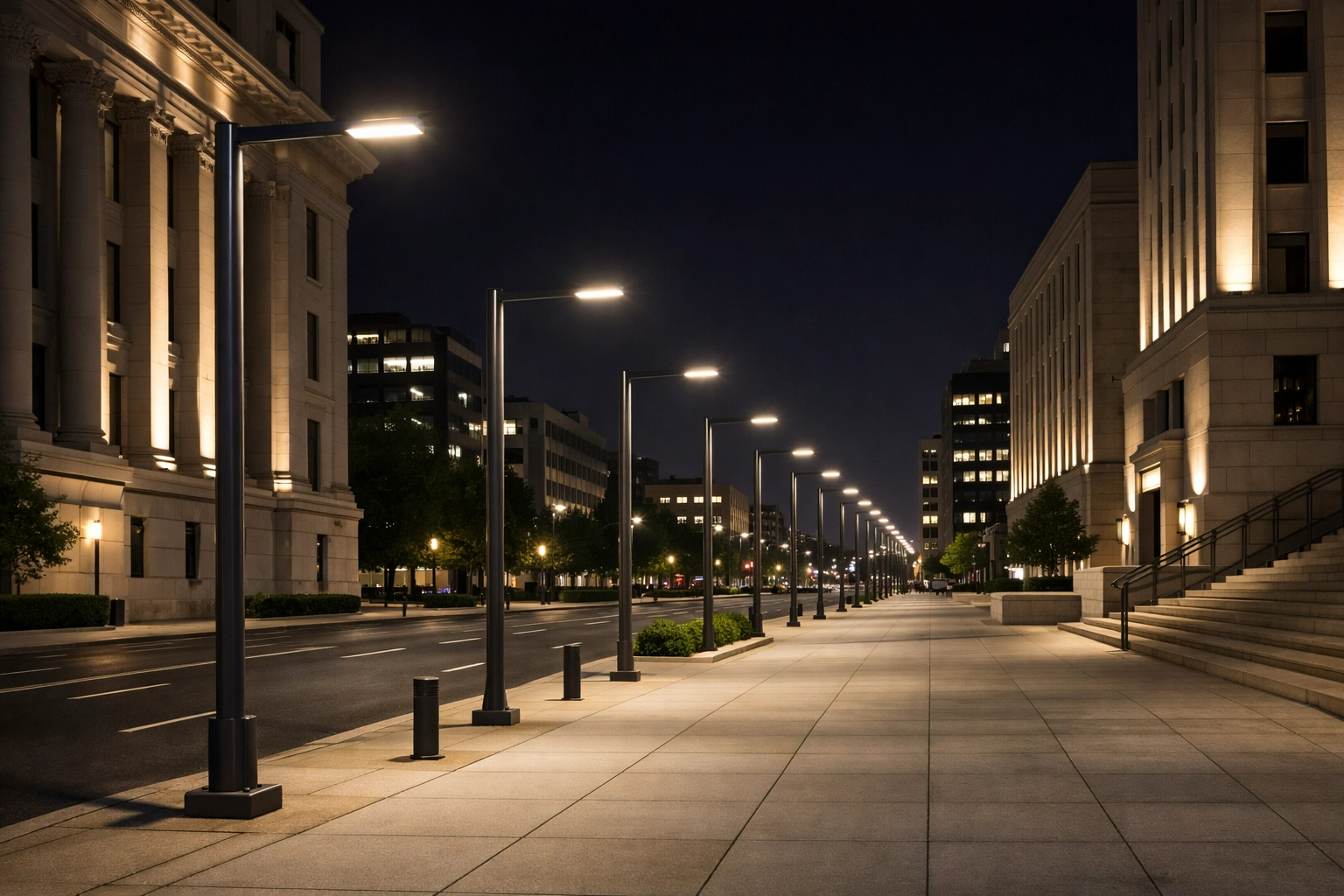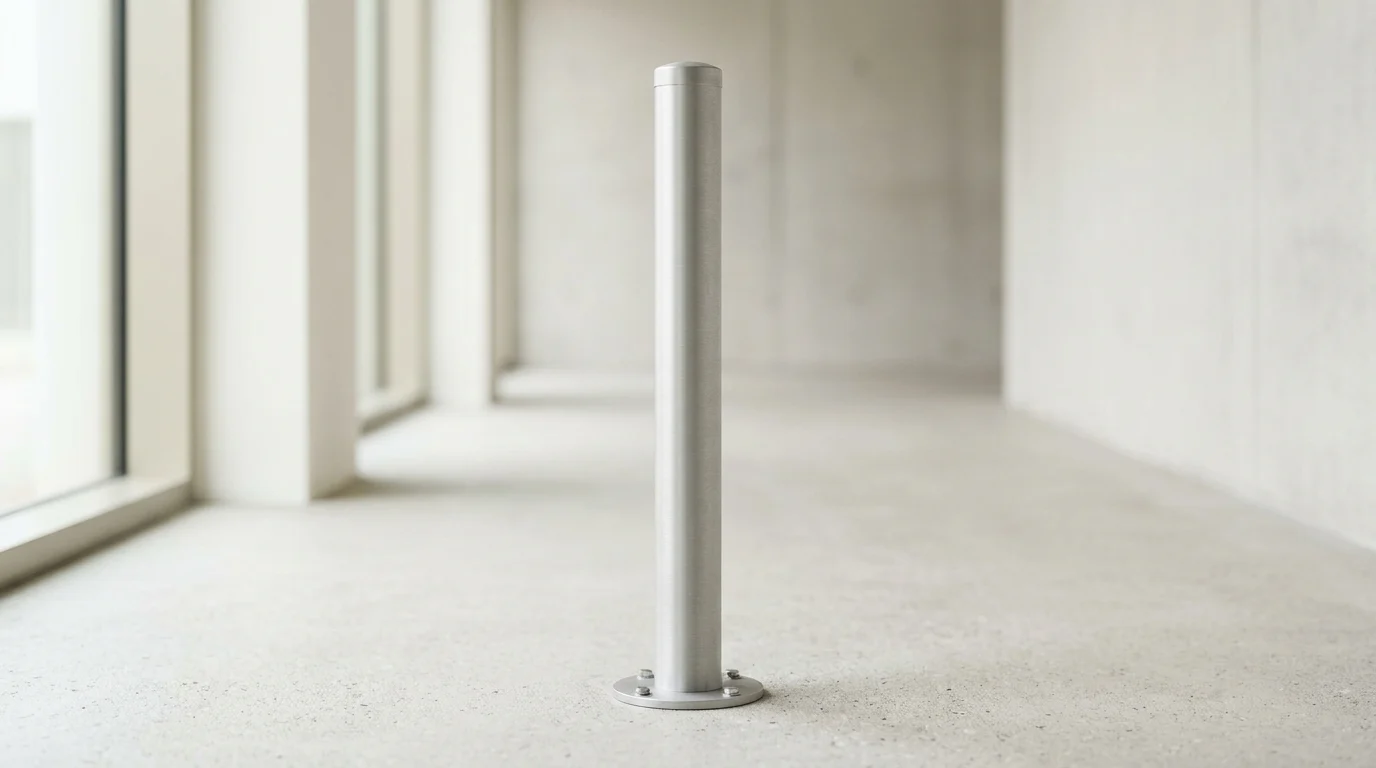
As cities modernize street lighting, the support structure matters almost as much as the lamp itself. This article explains why a sustainable aluminum pole is becoming a practical option for greener urban lighting, especially as municipalities face tighter carbon targets, procurement standards, and long-term maintenance pressures. Readers will see how aluminum poles can lower embodied emissions, support circular material use, resist corrosion, and reduce lifecycle costs compared with conventional alternatives. With that foundation, the discussion moves into the policy, environmental, and performance factors that make these poles a strategic fit for low-carbon city infrastructure.
Why sustainable aluminum poles are a strategic choice
Urban infrastructure is rapidly transitioning toward low-carbon solutions, positioning the sustainable aluminum pole as a critical asset for municipal lighting networks. The shift from traditional galvanized steel or concrete to sustainable aluminum aligns with broader municipal climate action plans and stringent green public procurement (GPP) mandates. As street lighting accounts for up to 40% of a municipality’s energy bill, optimizing both the active energy use via LEDs and the passive embodied carbon of the supporting infrastructure has become a dual imperative for urban planners.
How decarbonization targets and procurement standards drive adoption
Cities worldwide are implementing net-zero targets, necessitating infrastructure that minimizes embodied carbon. Traditional steel poles can carry an embodied carbon footprint exceeding 2.5 kg CO₂e per kg of material, largely due to the energy-intensive basic oxygen furnace processes and hot-dip galvanizing. In contrast, a sustainable aluminum pole produced using renewable energy—such as hydro-powered smelting—reduces this figure to below 4.0 kg CO₂e per kg for primary metal and can plummet to under 1.5 kg CO₂e per kg when utilizing high recycled scrap content.
These metrics directly support municipal Scope 3 emission reduction targets. Procurement standards, such as the EU Green Public Procurement criteria or LEED v4.1 for Cities and Communities, increasingly require lifecycle carbon accounting. By specifying sustainable aluminum, project managers can secure vital certification points and comply with stringent public infrastructure carbon caps, turning a passive support structure into an active component of the city’s decarbonization strategy.
Which urban lighting applications benefit most
The lightweight nature of aluminum makes it particularly advantageous for complex urban environments. Applications such as pedestrian walkways, smart-city infrastructure hubs, and coastal promenades benefit significantly. In dense urban centers, the ability to maneuver and install a 6-meter pole weighing under 45 kg without heavy diesel crane equipment reduces both installation emissions and traffic disruption.
Furthermore, coastal and high-salinity applications represent a prime use case. Where standard steel requires highly toxic and carbon-intensive anti-corrosion treatments that degrade over a 15- to 20-year cycle, sustainable aluminum poles demonstrate a service life exceeding 50 years. The natural formation of a protective oxide layer ensures that aesthetic and structural integrity remains intact, making these poles indispensable for waterfront developments and regions subject to heavy de-icing salt application.
What defines a sustainable aluminum pole
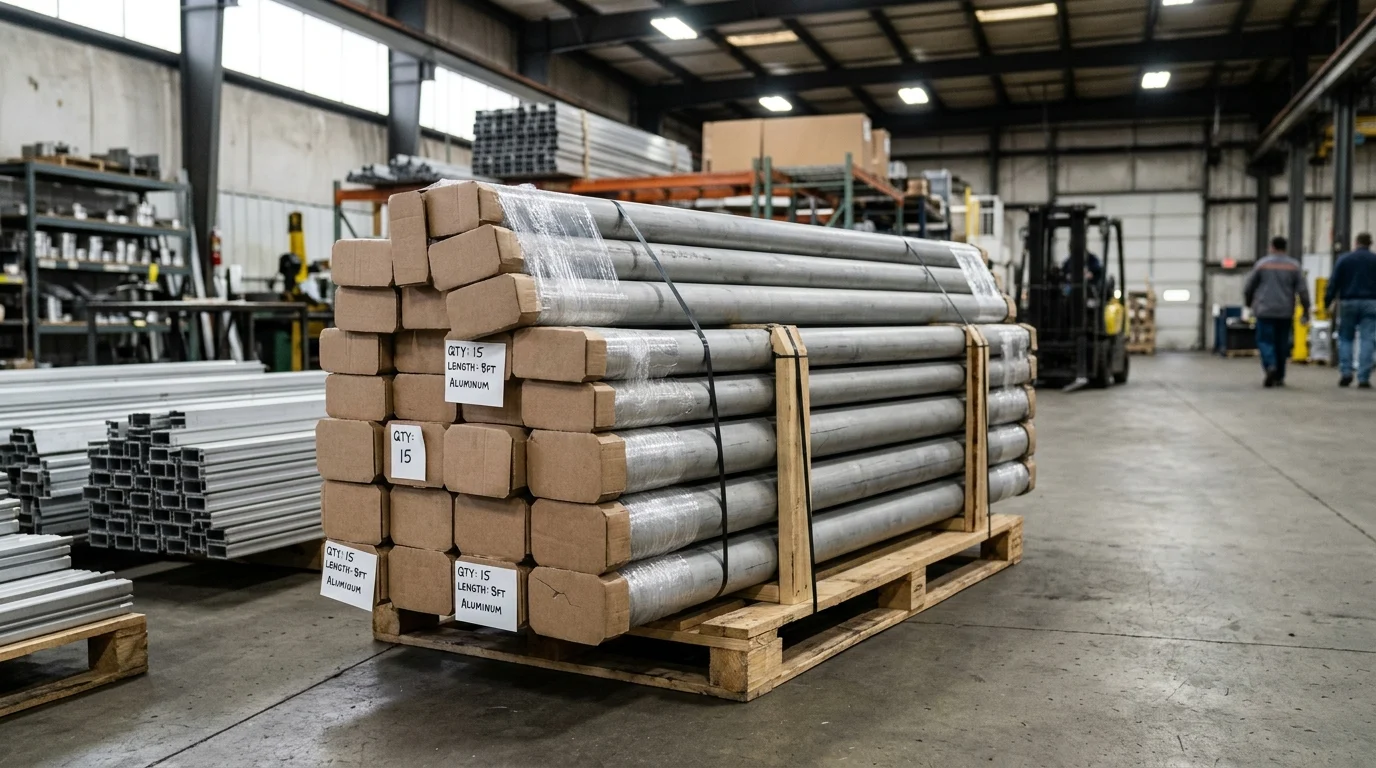
A sustainable aluminum pole is characterized not merely by its base material but by a holistic integration of low-carbon manufacturing, high recycled content, and optimized structural geometry. Defining sustainability in this context requires examining the entire supply chain, from billet casting to final extrusion and finishing.
Material, design, and manufacturing criteria
Primary criteria encompass the sourcing of the raw material, the energy matrix utilized during smelting, and the extrusion efficiency. Leading manufacturers ensure that at least 75% of the aluminum billet originates from post-consumer or post-industrial scrap. For the primary aluminum portion, the use of renewable energy—such as hydroelectricity or geothermal power—is a strict requirement to keep the carbon footprint at a fraction of the global average of 16.7 kg CO₂e per kg.
Design and manufacturing criteria also focus on material optimization. Advanced finite element analysis (FEA) allows engineers to design extrusion profiles that reduce wall thickness while maintaining structural integrity. This geometric optimization often achieves a weight reduction of 15% to 20% compared to legacy cylindrical designs, directly translating to fewer raw materials consumed and lower transport emissions per unit.
How recycled content, corrosion resistance, and structural performance compare
Utilizing 6000-series alloys, specifically 6061 and 6063, provides an optimal balance for sustainable lighting infrastructure. While increasing recycled content can sometimes introduce trace impurities, advanced metallurgical sorting and homogenization ensure that the T6 temper process yields consistent mechanical properties. Specifically, a 6063-T6 sustainable aluminum pole achieves a minimum yield strength of 214 MPa, while a 6061-T6 variant can reach up to 276 MPa.
This structural performance is intrinsically linked to the material’s natural corrosion resistance. The aluminum rapidly forms a passive, self-repairing aluminum oxide layer upon exposure to oxygen. This characteristic eliminates the need for VOC-heavy protective coatings or secondary galvanizing layers, preserving the material’s purity for future recycling while maintaining its structural capacity against dynamic wind loads.
A comparison table for sustainable aluminum pole options
To clearly delineate the environmental advantages, the following table compares standard primary aluminum, low-carbon primary aluminum, and high-recycled sustainable aluminum poles across key lifecycle metrics.
| Material Type | Embodied Carbon (kg CO₂e/kg) | Recycled Content | Typical Service Life | End-of-Life Value Retention |
|---|---|---|---|---|
| Standard Primary Aluminum | 14.0 – 18.0 | < 10% | 40+ Years | High |
| Low-Carbon Primary (Hydro) | 4.0 – 4.5 | < 10% | 40+ Years | High |
| High-Recycled Sustainable | 0.5 – 1.5 | 75% – 95% | 50+ Years | Very High (Closed-loop) |
How compliance, lifecycle assessment, and circularity shape selection
Verifying the environmental claims of a sustainable aluminum pole requires rigorous adherence to international standards and comprehensive lifecycle assessments (LCA). Without empirical documentation, the risk of greenwashing obscures the true environmental impact of infrastructure investments.
Which standards, certifications, and documentation matter
Procurement professionals must demand Type III Environmental Product Declarations (EPDs) compliant with ISO 14025 and EN 15804. An EPD provides a transparent, third-party-verified breakdown of the pole’s environmental impact across its life cycle phases (A1-A3 for production through C1-C4 for end-of-life).
Furthermore, the Aluminum Stewardship Initiative (ASI) Performance Standard certification serves as a baseline for responsible sourcing, ensuring that human rights, biodiversity, and emission controls are respected at the smelting and extrusion facilities. Manufacturing plants should also operate under ISO 50001 energy management systems, guaranteeing that the highly energy-intensive processes of heating billets and operating extrusion presses adhere to stringent energy efficiency benchmarks.
How to evaluate embodied carbon and end-of-life recovery
A cradle-to-cradle lifecycle assessment reveals the true value of aluminum in circular economies. Evaluating embodied carbon requires looking beyond the factory gate (A1-A3) to understand end-of-life recovery (Module D in an EPD). At the end of its 50-year operational life, a sustainable aluminum pole retains up to 95% of its original material value.
The remelting process requires only 5% of the energy initially needed to produce primary aluminum, equating to an energy consumption of roughly 0.7 to 1.0 kWh per kilogram. This near-perfect circularity drastically lowers the lifecycle embodied carbon, making it vastly superior to composite fiberglass or concrete poles, which typically end up in landfills or require energy-intensive downcycling into aggregate.
What sourcing and fabrication factors affect quality and cost
The physical performance and economic viability of sustainable aluminum poles depend heavily on the precision of fabrication processes and strategic supply chain management. Understanding these factors allows specifiers to balance upfront capital expenditure with long-term durability.
How alloy choice, extrusion quality, weld integrity, and tolerances affect performance
The specification of 6063-T6 alloy is standard due to its excellent extrudability and superior surface finish, which is critical for urban aesthetics. However, weld integrity is paramount, particularly at the high-stress junction where the pole shaft meets the base plate. Automated robotic MIG or TIG welding must be employed to ensure consistent penetration and mitigate the risk of heat-affected zone (HAZ) fatigue failure over decades of wind-induced vibration.
Extrusion tolerances must adhere strictly to ASTM B221 or EN 755 standards. For instance, straightness must be maintained within a deviation limit of 1.0 mm per meter. Tighter tolerances ensure that the pole maintains verticality under the eccentric loads of heavy LED luminaires and attached smart-city sensors, preventing long-term structural creep or aesthetic degradation.
How buyers can qualify suppliers
Buyers should evaluate suppliers based on their vertical integration and quality assurance protocols. Suppliers who control both the billet casting (incorporating verified post-consumer scrap) and the extrusion process offer greater traceability and tighter control over the alloy’s chemical composition.
Auditing suppliers for compliance with EN 1090 execution class 2 (EXC2) or AWS D1.2 structural welding codes for aluminum is critical. Buyers should request non-destructive testing (NDT) reports, such as dye penetrant or ultrasonic testing on base-plate welds, to ensure that the fabrication meets the rigorous safety requirements demanded in public spaces.
Key cost drivers and comparison points
The financial dynamics of pole procurement extend beyond the invoice price. Base material costs for aluminum fluctuate with the London Metal Exchange (LME), typically carrying a 20% to 30% upfront premium over standard carbon steel. However, secondary cost drivers significantly alter the project economics.
| Cost Category | Galvanized Steel Pole | Sustainable Aluminum Pole | Primary Impact Driver |
|---|---|---|---|
| Upfront Material | Baseline ($$) | Premium ($$$) | LME index and scrap availability |
| Freight & Logistics | High | Low (-40%) | Density (Steel: 7.8 g/cm³, Al: 2.7 g/cm³) |
| Installation Labor | High (Crane required) | Low (Manual/Light equipment) | Weight per linear meter |
| 20-Year Maintenance | High (Repainting/Rust mitigation) | Minimal ($0 active coating) | Natural oxide layer protection |
How to specify the right sustainable aluminum pole
Accurate specification ensures that the sustainable aluminum pole performs safely under local environmental conditions while maximizing the return on investment over its operational lifespan. A poorly specified pole can lead to catastrophic wind-induced failure or unnecessary over-engineering.
How to match pole height, load class, wind zone, and foundation needs
Specifiers must meticulously calculate the Effective Projected Area (EPA) of the luminaire, brackets, and any attached smart-city hardware (such as 5G antennas or environmental sensors). For a standard 8-meter pole subjected to AASHTO 2013 wind zones of 120 mph (193 km/h), the shaft diameter, taper ratio, and wall thickness must be engineered to limit deflection to less than 10% of the pole height.
Foundation requirements also differ significantly from steel alternatives. Because a 6-meter sustainable aluminum pole often weighs under 45 kg, the dead load on the foundation is minimal. This permits the use of smaller, less concrete-intensive helical piles or precast bases, further reducing the overall site carbon footprint and accelerating the installation schedule.
How to balance upfront cost with lifecycle value
Balancing upfront cost with lifecycle value requires looking at the total cost of ownership (TCO). While a sustainable aluminum pole might cost $400 to $600 upfront compared to a $300 galvanized steel equivalent, the economic narrative flips within the first decade of operation.
By eliminating the necessity for 10-year repainting and rust-mitigation cycles—which can cost upwards of $150 per pole per cycle in municipal labor and materials—the operational expenditure drops to near zero. Furthermore, factoring in an end-of-life scrap value of roughly $1.50 to $2.00 per kilogram ensures that municipalities achieve a positive financial ROI while simultaneously advancing their urban decarbonization and circular economy mandates.
Key Takeaways
- The most important conclusions and rationale for sustainable aluminum pole
- Specs, compliance, and risk checks worth validating before you commit
- Practical next steps and caveats readers can apply immediately
Frequently Asked Questions
Why is a sustainable aluminum pole a strong choice for city lighting projects?
It lowers embodied carbon, reduces installation effort through lighter weight, and offers long service life in urban and coastal environments.
Where do sustainable aluminum poles perform best?
They are especially effective for roadways, walkways, waterfronts, smart city hubs, schools, and commercial sites exposed to salt, moisture, or frequent maintenance pressure.
How does aluminum compare with steel for corrosion resistance?
Aluminum forms a natural protective oxide layer, so it resists corrosion without galvanizing and typically needs less maintenance in coastal or de-icing salt areas.
Can Morelux customize sustainable aluminum poles for project requirements?
Yes. Morelux supports custom heights, shapes, base plates, finishes, and application-specific designs with technical drawings, engineer support, and dependable manufacturing.
How can project buyers get pricing and technical support quickly?
Send your pole height, loading needs, installation environment, and quantity to Morelux for a fast quote, drawing review, and engineer-assisted specification support.