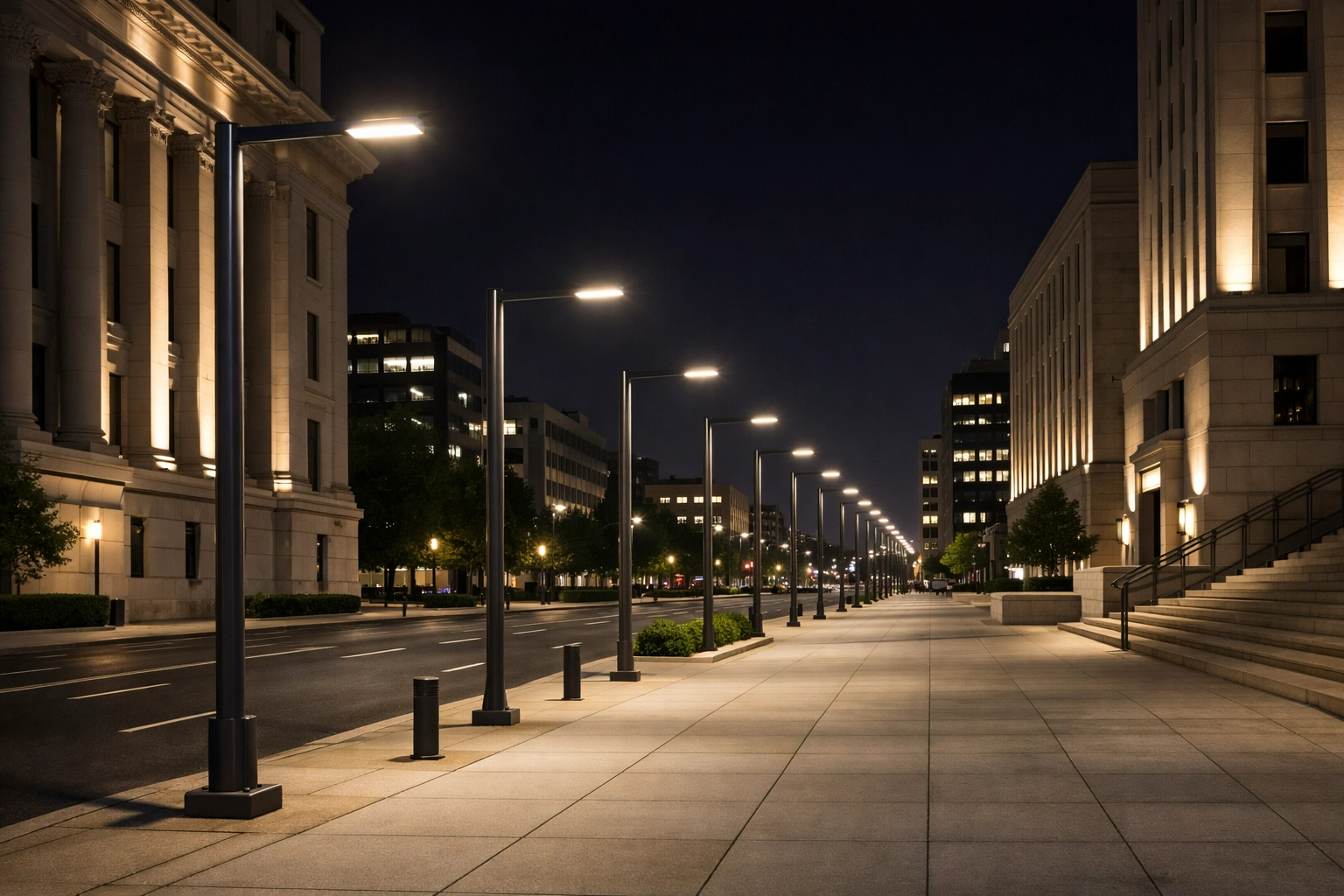
Custom lighting pole OEM development sits at the intersection of design intent, structural engineering, and scalable manufacturing. For projects that need exact dimensions, branded aesthetics, or integrated smart-city components, standard poles often fall short. This guide explains how a concept moves from drawings and performance requirements into tooling, prototyping, compliance checks, and full production. You’ll gain a practical view of the decisions that affect cost, lead time, durability, and long-term functionality, along with the technical checkpoints that help prevent redesigns later. With that foundation, the rest of the article examines each stage of the OEM process and what buyers, engineers, and manufacturers must align before production begins.
Custom Lighting Pole OEM Overview
The transition from standard off-the-shelf lighting infrastructure to custom Original Equipment Manufacturer (OEM) lighting poles represents a strategic shift for urban planners, real estate developers, and smart city integrators. Custom OEM development ensures that aesthetic visions align perfectly with structural integrity and highly specific functional requirements.
Developing a custom lighting pole is a multidisciplinary engineering endeavor. Because these structures must maintain public safety and operational performance for lifespans of 25 to 30 years, transitioning from a conceptual blueprint to mass production demands rigorous adherence to material science, load-bearing physics, and optimized manufacturing workflows.
Project economics, brand requirements, and infrastructure needs
Developing custom lighting poles requires a thorough analysis of project economics and infrastructure demands. While standard poles offer lower upfront costs, custom OEM models require initial tooling and engineering investments—typically ranging from $3,000 to $15,000 for specialized extrusion dies, casting molds, or custom press-brake tooling.
This initial capital expenditure, however, is rapidly amortized when integrating proprietary smart city nodes. Modern infrastructure often requires housing 5G small cells, EV charging ports, and environmental sensors. These advanced nodes demand exact internal volumetric capacities, specialized structural reinforcements, and thermal management profiles that off-the-shelf poles simply cannot accommodate.
Buyer profiles that benefit from custom lighting poles
The primary buyer profiles driving the custom lighting pole market include municipal authorities modernizing heritage districts, large-scale commercial real estate developers seeking cohesive architectural branding, and telecommunications integrators deploying localized network hardware.
For these entities, procurement volumes play a critical role in the decision-making process. Project pipelines exceeding 300 to 500 units generally justify the transition from modified standard products to a fully custom OEM development pipeline. At this scale, unit economics align favorably, ensuring exact compliance with regional deployment strategies without incurring prohibitive per-unit premiums.
Design and Engineering Requirements
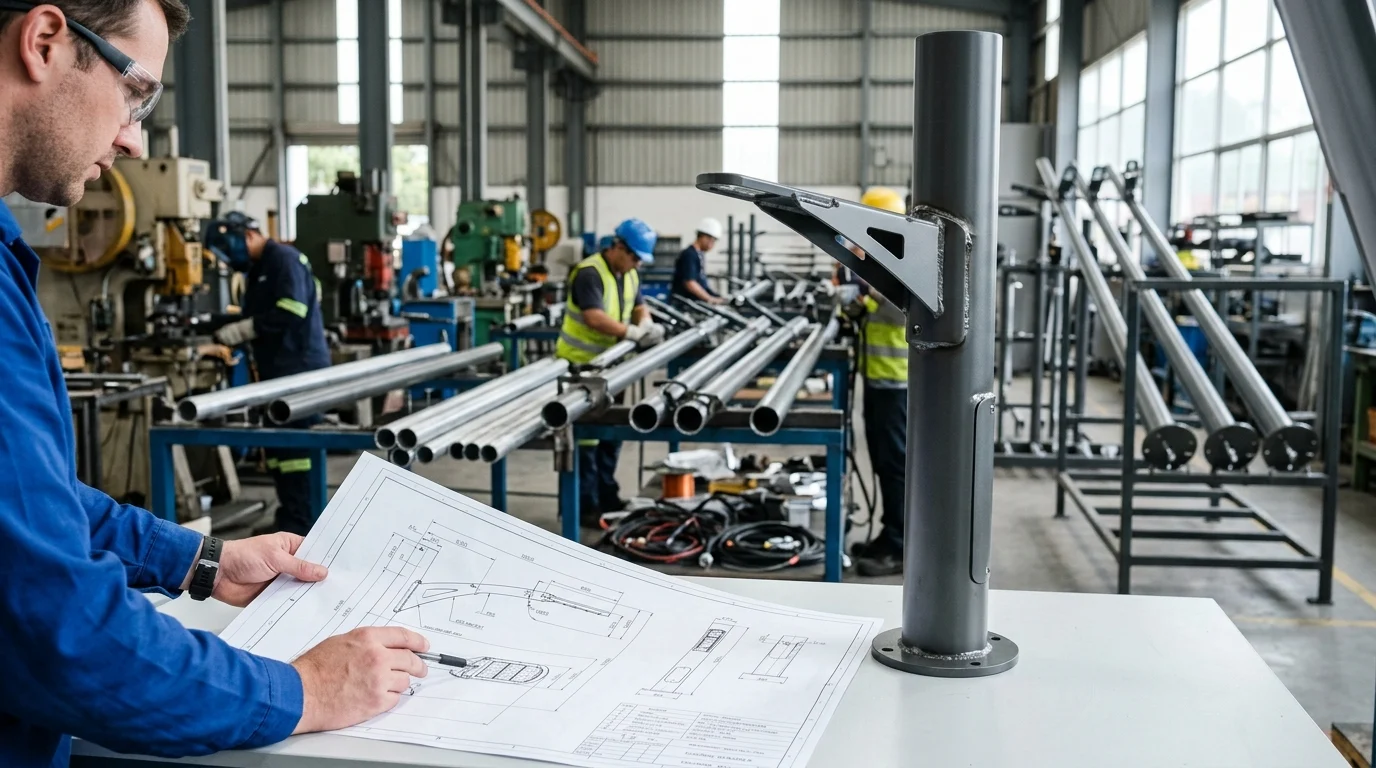
Translating an architectural vision into a manufacturable product requires rigorous engineering. The blueprint stage must bridge the gap between aesthetic intent and structural reality, utilizing advanced Computer-Aided Design (CAD) and Finite Element Analysis (FEA) to validate conceptual models against physical stresses.
Design flaws identified during mass production are costly to rectify. Therefore, the engineering phase must lock in all critical variables—from aerodynamic drag coefficients to internal cable routing clearances—before any steel is cut or aluminum is extruded.
Technical inputs to finalize at the blueprint stage
At the blueprint stage, engineers must finalize several critical technical inputs to ensure structural viability. The most vital metric is the Effective Projected Area (EPA) of the intended luminaires and attached accessories, which dictates the aerodynamic drag the pole must withstand under maximum wind conditions.
Additionally, engineers must define the anchor bolt circle diameter—typically ranging from 10 to 15 inches for standard commercial applications—as well as base plate dimensions, handhole placements for maintenance access, and internal wiring raceway clearances to safely accommodate both high-voltage power and low-voltage data cabling.
Material, height, and wall thickness selection
Selecting the appropriate material, height, and wall thickness is paramount for structural integrity and environmental resilience. Aluminum (such as the 6063-T6 alloy) is favored for its natural corrosion resistance and lighter weight, whereas carbon steel (ASTM A500 or Q345) offers superior tensile strength for high-load, heavy-duty applications.
Pole heights can range from 3-meter pedestrian pathway lights to high-mast applications exceeding 30 meters. Consequently, wall thicknesses must be engineered to match the applied load. Thicknesses often start at 3.0mm (11-gauge) for lightweight residential applications and scale up aggressively to 8.0mm (5/16-inch) or more for infrastructure located in high-risk hurricane zones.
Custom vs standard lighting pole comparison
A comprehensive evaluation of custom versus standard lighting poles reveals distinct operational trade-offs. While standard poles offer rapid deployment, custom variants provide unparalleled integration and structural tuning capabilities.
| Feature/Metric | Standard Lighting Poles | Custom OEM Lighting Poles |
|---|---|---|
| Lead Time | 4 to 6 weeks | 10 to 16 weeks (including tooling) |
| Tooling Costs | $0 (Fully Amortized) | $3,000 – $15,000+ (Project dependent) |
| EPA Capacity | Fixed by catalog specifications | Engineered to exact project loads |
| Smart Device Integration | External mounting brackets required | Internalized, flush-mount, tamper-proof |
| Aesthetic Customization | Limited to basic powder coat colors | Unlimited profiles, textures, and forms |
Sourcing, Prototyping, and Cost Control
Effective sourcing and prototyping bridge the theoretical engineering phase with physical manufacturing realities. Managing cost drivers without compromising structural integrity requires strategic supplier selection and iterative design refinement.
The transition from a 3D model to a physical prototype is often where theoretical design meets the limitations of industrial machinery. Navigating this phase efficiently ensures the project remains within budget and meets targeted launch schedules.
Supplier qualification criteria
Evaluating potential manufacturing partners requires a stringent qualification matrix. Top-tier lighting pole OEMs must possess ISO 9001 certification and demonstrate robust in-house capabilities, including multi-axis laser tube cutting, robotic submerged arc welding, and automated powder coating lines.
Furthermore, an acceptable OEM supplier should maintain a historical production defect rate of less than 0.5% and possess verifiable supply chain traceability for raw steel and aluminum billets, ensuring material test reports (MTRs) are authentic and compliant.
Prototype review and design for manufacturability
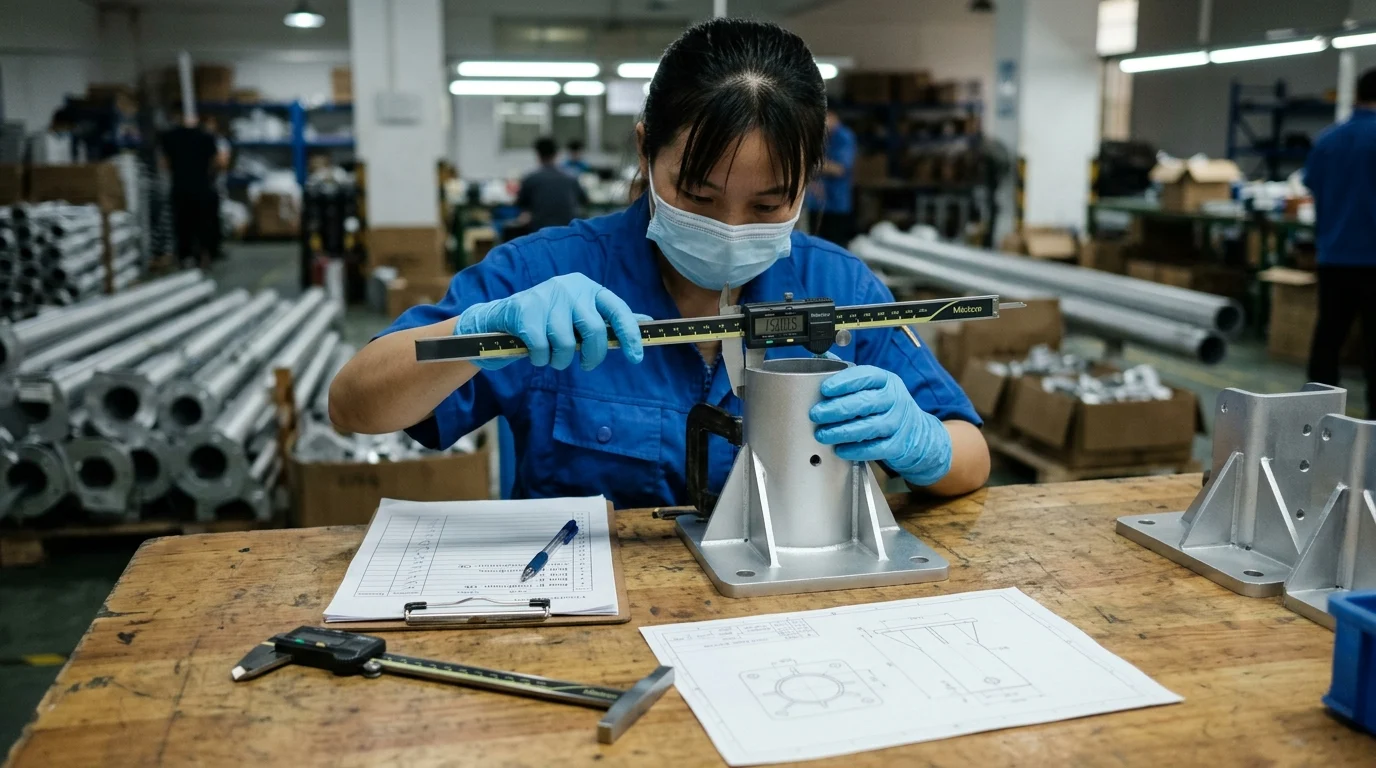
Before authorizing mass production, a comprehensive Design for Manufacturability (DFM) review and prototype evaluation must occur. The First Article Inspection (FAI) unit serves as the physical proof of concept, allowing stakeholders to tactilely and visually assess the product.
During this phase, quality engineers verify critical tolerances, such as ensuring base plate hole alignments are within a strict +/- 2.0mm deviation and that shaft tapers remain uniform. DFM adjustments made during this stage often reduce manufacturing cycle times by eliminating unnecessarily complex welds or optimizing extrusion profiles for faster throughput.
Key cost drivers, tooling, and minimum order quantities
Controlling expenses during OEM development requires a deep understanding of key cost drivers, particularly tooling amortization and Minimum Order Quantities (MOQs). Because setup times for heavy machinery are intensive, manufacturers utilize MOQs to ensure production profitability.
Custom steel poles typically command lower MOQs—often around 50 to 100 units—due to the flexibility of press-brake forming and automated seam welding. Conversely, custom extruded aluminum poles may require MOQs exceeding 200 units to justify the minimum billet run required by extrusion facilities. Material index pricing fluctuations, labor for complex manual finishing, and custom packaging requirements further influence the final per-unit cost.
Compliance, Quality Assurance, and Logistics
Lighting poles are critical infrastructure assets subjected to severe environmental stresses and public interaction. Ensuring compliance with international standards, executing rigorous quality assurance protocols, and managing complex logistics are essential to mitigate liability.
A failure in a lighting pole’s structural integrity can result in catastrophic property damage or loss of life. Therefore, the transition to mass production must be gated by uncompromising testing and logistical planning.
Regional standards, wind load, and corrosion protection
OEM developments must comply with stringent regional safety and structural standards, such as AASHTO LTS-6 in North America or EN 40 in the European Union. Wind load engineering is a primary focus; poles must be certified to withstand local wind speeds, which can range from 90 mph in inland areas to over 180 mph in coastal hurricane zones.
To ensure longevity, robust corrosion protection is mandatory. Steel poles typically require hot-dip galvanizing to ASTM A123 standards, mandating a minimum zinc coating thickness of 85 microns. This is often followed by a marine-grade architectural powder coat, providing a dual-layer defense against harsh urban or coastal environments.
Inspection plans, weld quality, and coating tests
Quality assurance necessitates a multi-tiered inspection plan executed both during and after fabrication. Structural integrity relies heavily on weld quality, requiring Non-Destructive Testing (NDT) such as Ultrasonic Testing (UT) or Magnetic Particle Inspection (MPI) on all full-penetration base welds.
| Inspection Type | Methodology / Standard | Acceptance Threshold |
|---|---|---|
| Weld Integrity | Ultrasonic Testing (UT) / AWS D1.1 | Zero cracks, complete penetration |
| Galvanizing Thickness | Magnetic Thickness Gauge | Minimum 85 microns (ASTM A123) |
| Coating Adhesion | Cross-Hatch Cutter Test (ASTM D3359) | 4B or 5B classification |
| Corrosion Resistance | Salt Spray Test (ASTM B117) | 2,000 to 3,000 hours without red rust |
| Dimensional Accuracy | Calibrated Laser / CMM | +/- 2.0mm on critical mounting points |
Packaging, shipping, and installation planning
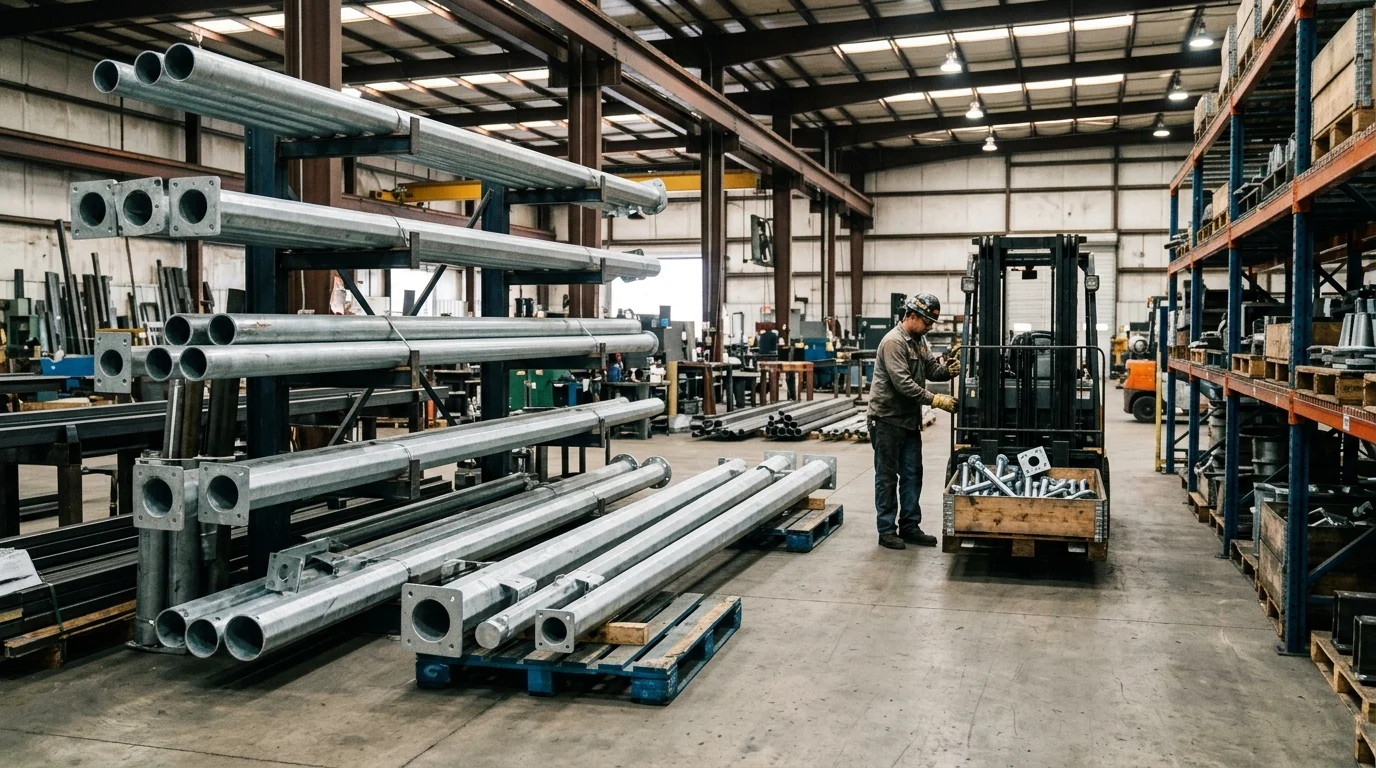
The physical dimensions and weight of lighting poles present unique logistical challenges. Proper packaging requires custom wooden cradles, heavy-duty dunnage, and protective wrapping to prevent transit abrasions that could compromise the specialized coatings.
Shipping is typically executed using 40-foot High Cube (40HQ) containers. Depending on the taper, base plate size, and height (e.g., 6-meter versus 10-meter poles), a single container can efficiently transport between 60 and 120 units through strategic nesting. Concurrent installation planning is also critical; anchor bolts and base templates are usually shipped weeks ahead of the main pole delivery, allowing civil contractors to pour and cure concrete foundations prior to the final site delivery.
Final OEM Selection and Production Scale-Up
Transitioning from successful prototyping to continuous mass production requires a formalized partnership framework. The final selection of an OEM partner is not merely a transactional decision but a long-term strategic alignment.
A well-structured production scale-up ensures that the quality achieved in the First Article Inspection is consistently replicated across thousands of units, supported by legal frameworks that protect the buyer’s intellectual property and financial investments.
OEM partner evaluation framework
Finalizing the OEM partner requires a comprehensive evaluation framework that weighs multiple operational pillars. Procurement teams typically utilize a scorecard approach to remove subjective bias from the final decision.
A standard evaluation model allocates 30% of the score to technical and engineering capacity, 30% to QA/QC infrastructure, 20% to financial stability, and 20% to supply chain resilience. This quantifiable approach ensures the chosen manufacturer has the capital and operational bandwidth to scale production without degrading the stringent tolerances established during the prototyping phase.
Contracts, change control, forecasting, and after-sales support
Scaling up production necessitates robust contractual safeguards, typically outlined in a Master Service Agreement (MSA). This foundational document must define the Engineering Change Order (ECO) process to manage future design iterations systematically and without dispute.
To mitigate raw material volatility and secure dedicated production slots, buyers should provide their OEM partners with 12-week to 16-week rolling volume forecasts. Finally, comprehensive after-sales support and warranty provisions—commonly spanning 5 to 10 years for structural integrity and 3 to 5 years for surface finish retention—must be legally codified to protect the buyer’s investment throughout the product’s entire operational lifecycle.
Key Takeaways
- The most important conclusions and rationale for From Blueprint to Mass Production: A Complete Guide to Custom Lighting Pole OEM Development
- Specs, compliance, and risk checks worth validating before you commit
- Practical next steps and caveats readers can apply immediately
Frequently Asked Questions
When should a project choose custom OEM lighting poles instead of standard models?
Choose custom OEM when you need exact dimensions, branding, smart-device integration, or volumes above roughly 300–500 units. It helps reduce long-term compromises on fit, load capacity, and maintenance.
What technical details should I prepare before requesting a quote from Morelux?
Send pole height, material preference, EPA load, wind speed, base plate and bolt circle, arm details, handhole position, finish, and any internal device requirements. Drawings or reference photos help speed review.
How long does custom lighting pole OEM development usually take?
Custom projects typically take about 10–16 weeks including engineering and tooling. Morelux can usually provide a 24-hour initial quote after receiving clear project specifications.
Which material is better for custom lighting poles: aluminum or steel?
Aluminum is lighter and naturally corrosion resistant, making it good for coastal or decorative projects. Steel offers higher strength for heavier loads, taller poles, and demanding infrastructure applications.
Can Morelux support smart city or infrastructure pole projects?
Yes. Morelux manufactures custom steel and aluminum poles with in-house cutting, bending, welding, coating, anodizing, and testing, plus engineer support for cable routing, mounting space, and structural requirements.