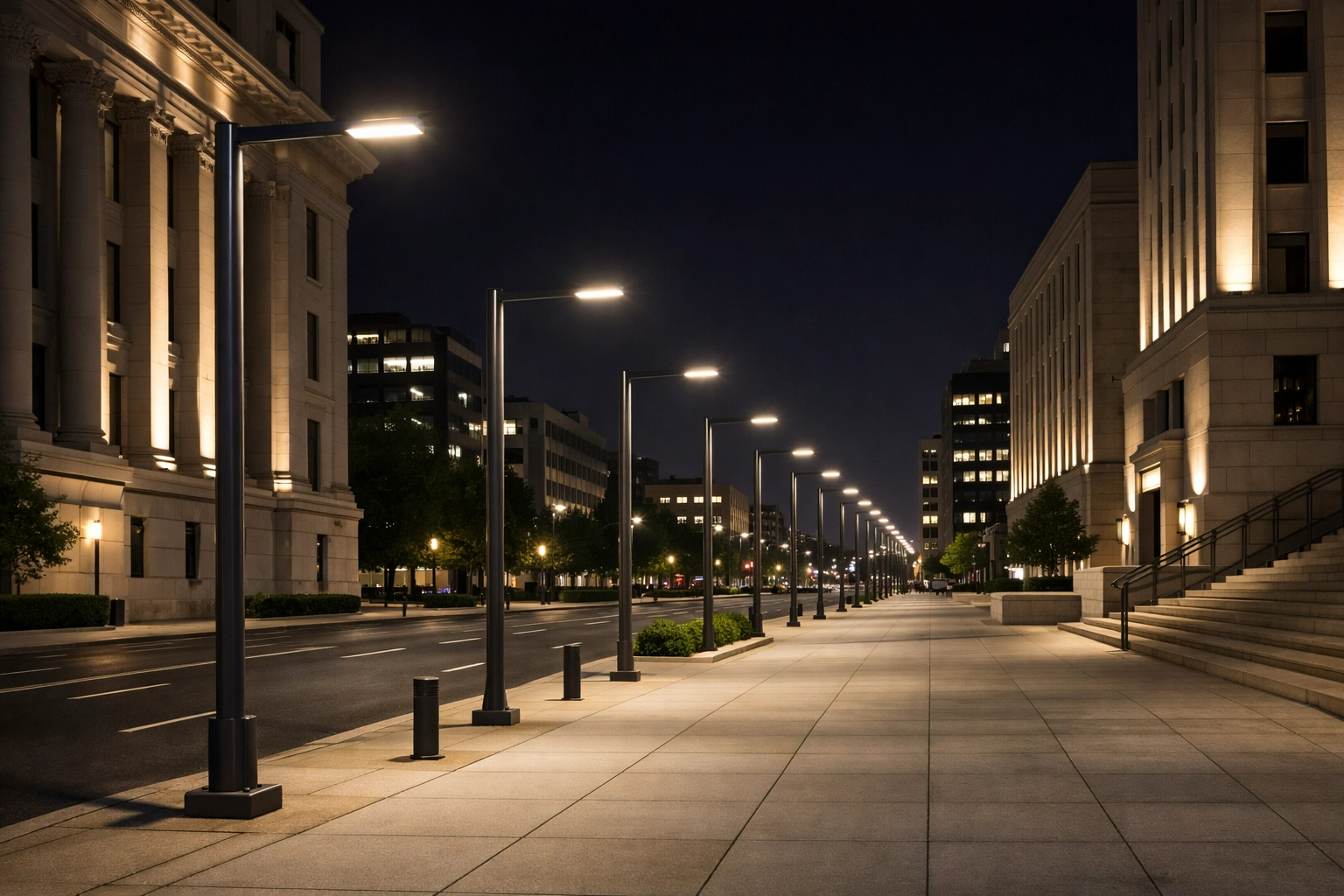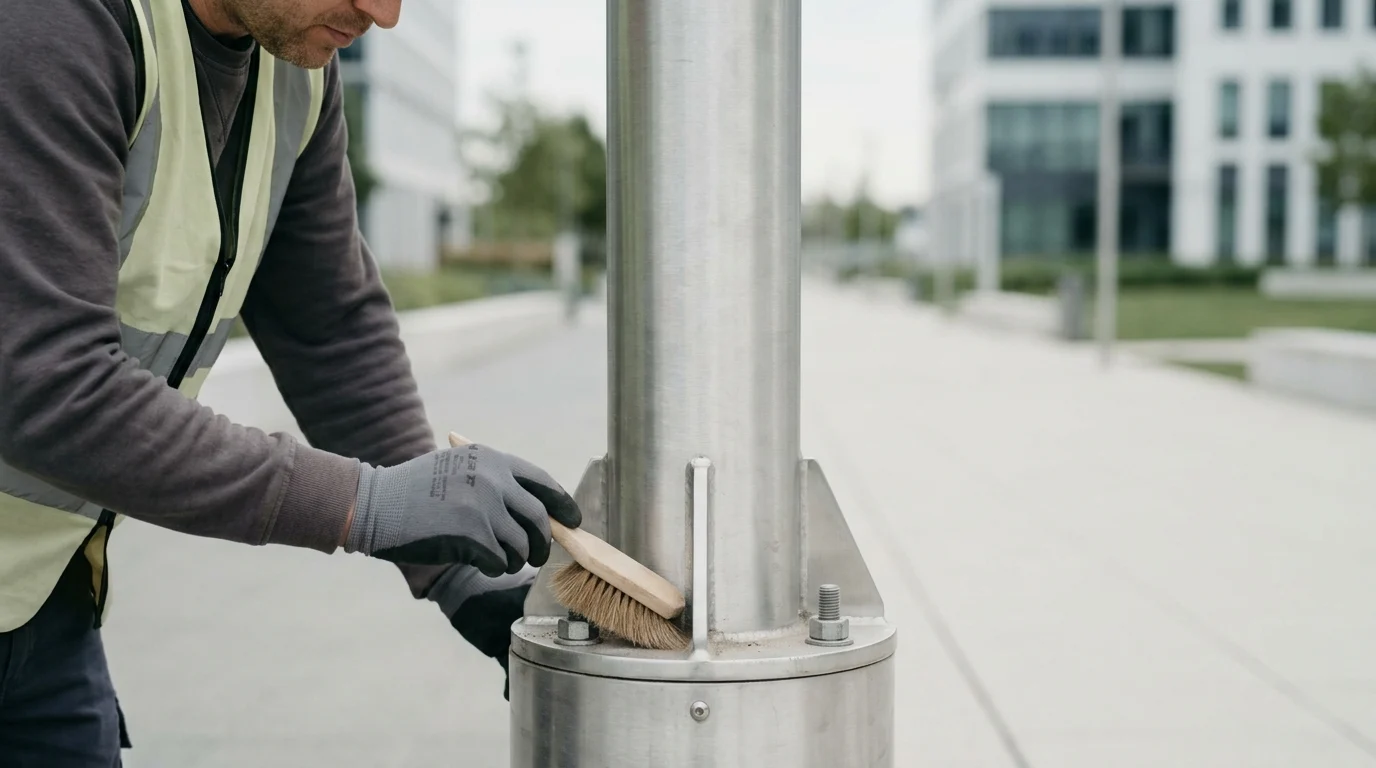
Reaching a 30-year service life with aluminum light poles depends less on the metal alone than on a disciplined maintenance plan. Although aluminum resists rust, poles still face fatigue, base damage, galvanic corrosion, vibration, and accelerated wear in coastal, industrial, or high-wind locations. This article explains how to maintain aluminum light poles through practical inspection routines, cleaning methods, hardware checks, corrosion control, and site-specific scheduling. You’ll also see how preventive maintenance reduces outages, extends structural reliability, and lowers long-term replacement and liability costs, setting up a clear framework for the maintenance steps that follow.
Why Aluminum Light Pole Maintenance Matters
Understanding how to maintain aluminum light poles is foundational to maximizing infrastructure ROI. While aluminum is inherently resistant to atmospheric corrosion due to its naturally occurring oxide layer, it is not impervious to structural fatigue, galvanic corrosion, or extreme environmental stressors. Achieving the benchmark 30-year service life requires transitioning from reactive repairs to a formalized asset management strategy.
Lifecycle Cost, Uptime, and Liability
Asset managers must evaluate maintenance through the lens of total cost of ownership. The capital expenditure of a commercial aluminum light pole ranges from $800 to $2,500, but the liability of a structural failure can trigger legal and property damage claims exceeding $100,000 per incident. Implementing an annualized preventive maintenance program typically costs between $15 and $30 per pole, ensuring maximum uptime for roadway and pedestrian illumination while mitigating catastrophic liability risks.
Service Life and Site Conditions
A pole’s trajectory toward a 30-year lifespan is heavily dictated by its localized environment. Infrastructure installed in AASHTO-rated 150 mph wind zones experiences accelerated fatigue compared to poles in 90 mph zones. Furthermore, site-specific variables such as proximity to coastal salt spray, industrial chemical exposure, or heavy physical vibration from adjacent rail lines will accelerate material degradation, necessitating customized maintenance intervals rather than a uniform approach.
How to Build a Maintenance Program
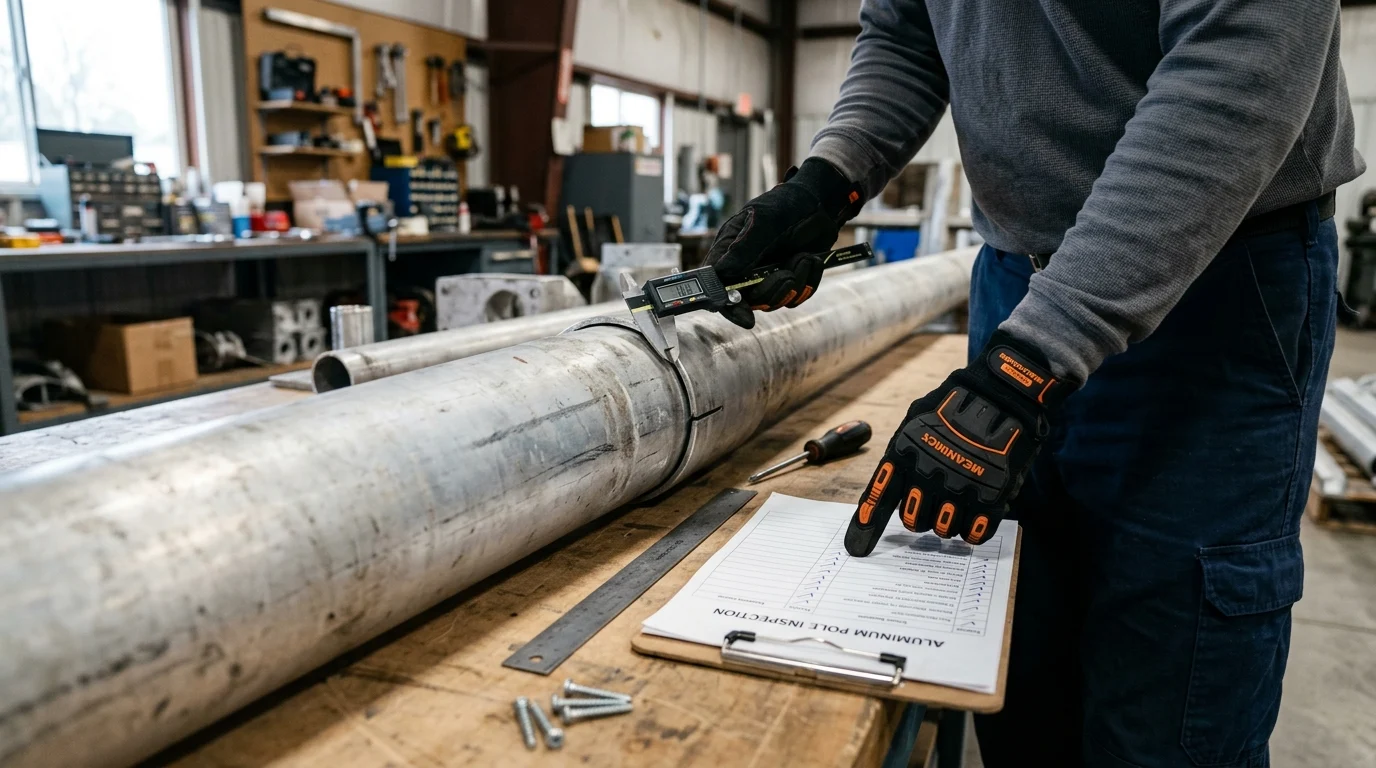
A resilient maintenance framework begins with a comprehensive inventory and baseline structural assessment. Facility managers must catalog every asset, detailing physical specifications, installation dates, and environmental exposure classifications to build an actionable maintenance database.
Pole Materials, Finishes, and Base Design
Aluminum alloys utilized in pole manufacturing, predominantly 6063-T6 and 6061-T6, offer yield strengths ranging from 25,000 to 35,000 psi. However, the preservation of this strength depends heavily on the surface finish and base configuration. Anodized finishes provide superior penetration resistance against chlorides, while powder-coated surfaces require periodic touch-ups to prevent localized oxidation. Anchor base designs demand rigorous inspection of the base plate and grout pad, whereas direct burial poles require targeted soil-to-air interface monitoring.
Common Failure Modes and Inspection Priorities
Inspectors must prioritize the identification of vibration-induced fatigue, particularly at the heat-affected zone (HAZ) directly above the base weld. Another critical failure mode is galvanic corrosion, which occurs when aluminum interacts with dissimilar metals, such as steel anchor bolts, in the presence of an electrolyte. A structural engineering review is mandatory if an inspection reveals a wall thickness loss exceeding 10% or any visible micro-cracking along the primary weld seams.
Standards, Manufacturer Guidance, and Records
Maintenance protocols should align with industry benchmarks, specifically the AASHTO LTS-6 specifications for structural supports. Manufacturers typically provide torque specifications for anchor bolts—often requiring tightening to one-third turn past snug-tight—which must be verified during initial and subsequent inspections. Maintaining a digital twin or a centralized Geographic Information System (GIS) database ensures that torque logs, inspection dates, and material specifications are retained for the entire 30-year lifecycle.
Inspection and Preventive Maintenance in Practice
Translating theoretical maintenance plans into actionable field execution requires standardized procedures. Field technicians must be equipped with precise schedules and protocols tailored to the specific degradation mechanisms present in their geographic region.
Inspection Schedules by Environment
Inspection frequencies must be calibrated to the severity of the operating environment. Coastal or heavy industrial zones mandate aggressive monitoring, while benign inland environments permit extended intervals.
| Environment Classification | Exposure Characteristics | Recommended Inspection Interval | Visual Inspection Scope | NDT Requirement |
|---|---|---|---|---|
| Mild / Inland | Low humidity, no salt, stable winds | Every 4 to 5 Years | Base plate, handhole, luminaire | Post-storm events |
| Moderate / Urban | De-icing salts, moderate traffic vibration | Every 2 to 3 Years | Base bolts, coating integrity | 10% random sampling |
| Severe / Coastal | Heavy salt spray, hurricane wind zones | Annually | Galvanic isolation, HAZ welds | High-risk weld seams |
Cleaning, Surface Protection, and Corrosion Control
Routine cleaning extends the efficacy of surface finishes. Poles exposed to road salts or marine environments should be washed annually using a neutral pH detergent (pH 6.0 to 8.0) and low-pressure water (under 1,500 psi) to remove chloride deposits without stripping protective coatings. To control galvanic corrosion, technicians must ensure that dielectric pads or isolation washers remain intact between the aluminum base plate and steel leveling nuts.
Repair vs Replacement Decisions
Asset managers must establish objective thresholds for repair versus replacement. Superficial damage, such as cosmetic scratches or minor oxidation, can be mitigated in the field with industrial-grade zinc-rich primers and color-matched topcoats. However, if non-destructive testing (NDT) reveals structural anomalies—such as crack propagation in the HAZ, deformation of the base plate, or wall thickness degradation exceeding 15%—immediate replacement is the only viable engineering decision to maintain site safety.
How to Compare Maintenance Costs and Risks
Optimizing a maintenance budget requires a granular understanding of the financial variables associated with light pole management. Decision-makers must weigh the predictable costs of proactive servicing against the volatile expenses of emergency interventions.
Routine vs Corrective Maintenance
The financial disparity between routine and corrective maintenance is stark. A comprehensive routine inspection, encompassing visual checks and bolt torque verification, typically costs $40 to $70 per pole. Conversely, a corrective emergency replacement—necessitated by a neglected structural failure—can escalate to $3,500 to $6,000 per pole when factoring in expedited material procurement, emergency labor rates, and immediate site remediation.
Labor, Access, Traffic Control, and Weather Factors
Logistical factors heavily influence maintenance expenditures. Deploying bucket trucks or aerial lifts for luminaire and upper-pole inspections incurs significant hourly equipment costs. Furthermore, in urban or high-traffic environments, compliance with the Manual on Uniform Traffic Control Devices (MUTCD) for lane closures and flaggers can inflate total labor costs by 40% to 60%. Weather constraints, such as high sustained winds or freezing temperatures, also dictate operational windows, potentially delaying critical access and extending contractor billable hours.
Contractor Selection and Procurement Criteria
Procuring external maintenance services requires stringent vetting. Contractors must possess specific qualifications, including ASNT Level II certification for any required non-destructive testing of critical welds. Procurement criteria should also mandate a minimum of $2 million in general liability insurance, documented experience with aluminum infrastructure, and the capacity to provide digitally logged, geocoded inspection reports compatible with the facility’s centralized asset management software.
Condition-Based Planning and Documentation

Long-term infrastructure resilience relies on condition-based planning. By systematically documenting asset health, organizations can accurately forecast capital expenditures and optimize the remaining service life of their lighting networks.
Condition Ratings and Remaining Service Life
Implementing a standardized condition rating system allows asset managers to triage maintenance interventions and project the Remaining Service Life (RSL) of each pole.
| Condition Rating | Structural Integrity | Surface & Finish Condition | Estimated RSL | Recommended Action |
|---|---|---|---|---|
| 1 – Excellent | No defects, bolts properly torqued | Intact coating, no oxidation | 25+ Years | Standard routine inspection |
| 2 – Good | Minor bolt loosening | Superficial scratches | 15 – 25 Years | Re-torque bolts, monitor |
| 3 – Fair | Moderate oxidation at base | Localized coating failure | 5 – 15 Years | Spot treat finish, schedule NDT |
| 4 – Poor | Detectable wall thinning (<10%) | Severe pitting, galvanic action | 1 – 5 Years | Immediate remediation plan |
| 5 – Critical | Visible weld cracking, >15% loss | Total coating failure | < 1 Year | Decommission and replace |
Budgeting, Documentation, and Performance Metrics
Effective documentation transforms raw inspection data into actionable performance metrics. Asset managers should track the Mean Time Between Failures (MTBF) and overall network compliance rates to refine future procurement specifications. For sustainable financial planning, organizations should establish an annual operational expenditure (OPEX) budget equivalent to 1.5% to 2.5% of the total asset replacement value, ensuring sufficient capital is reserved for both routine upkeep and scheduled end-of-life replacements.
Key Takeaways
- The most important conclusions and rationale for how to maintain aluminum light poles
- Specs, compliance, and risk checks worth validating before you commit
- Practical next steps and caveats readers can apply immediately
Frequently Asked Questions
How often should aluminum light poles be inspected?
Use site conditions as the guide: every 4–5 years inland, every 2–3 years in urban salt or vibration exposure, and annually in coastal or severe wind zones.
What areas need the closest attention during maintenance?
Check the base weld heat-affected zone, handhole, base plate, anchor bolts, coating damage, and any aluminum-to-steel contact points where galvanic corrosion can start.
How can galvanic corrosion on aluminum light poles be prevented?
Keep aluminum isolated from dissimilar metals with proper washers, sleeves, or coatings, and clean off salt, moisture, and debris that act as electrolytes.
When should a pole be reviewed by an engineer?
Request an engineering review if you find visible weld cracking, loosened base components, impact damage, or wall-thickness loss above 10%.
Can Morelux support customized maintenance planning for project buyers?
Yes. Morelux can support pole specifications, technical drawings, and practical maintenance guidance so buyers can match inspection plans to coastal, roadway, solar, or smart pole projects.