Introduction
Solar light poles with integrated photovoltaic panels face a maintenance problem that conventional solar installations rarely encounter: grime, dust, exhaust residue, and bird droppings can quickly reduce light capture while making manual cleaning expensive and disruptive. Self-cleaning technology addresses this gap by keeping panel surfaces clearer for longer, helping preserve energy output and supporting reliable off-grid lighting. This article explains why soiling matters on pole-mounted systems, how automated cleaning methods reduce performance losses, and what that means for the long-term efficiency and economics of urban solar lighting.
Why Solar Light Pole Self-Cleaning Technology Matters
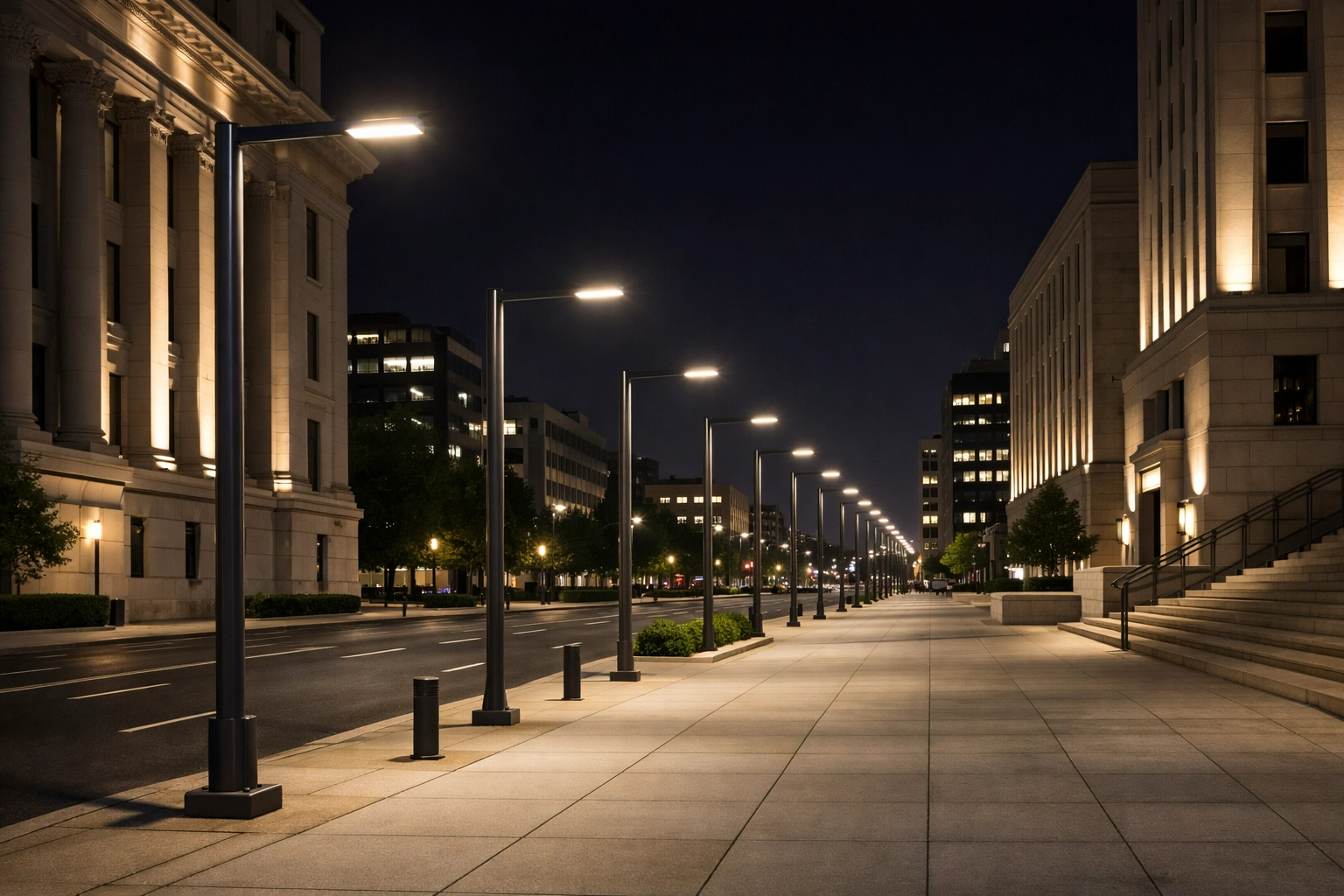
The integration of photovoltaic arrays directly onto street lighting infrastructure introduces unique operational and maintenance challenges. Unlike traditional ground-mounted solar farms where manual cleaning is economically feasible, pole-mounted solar panels suffer from exceptionally high accessibility costs due to their elevation and dispersed urban placement. The continuous accumulation of particulate matter, bird guano, vehicular exhaust residues, and environmental debris on these vertical or cylindrical surfaces drastically degrades optical transmittance. Because these poles are often deployed along busy highways or within sprawling commercial complexes, dispatching maintenance crews with specialized lift equipment generates prohibitive labor costs and necessitates disruptive traffic management. This persistent soiling requires automated remediation strategies to maintain system viability and ensure continuous off-grid illumination.
How does self-cleaning technology support higher photovoltaic output?
Self-cleaning technology improves photovoltaic conversion efficiency by mitigating the severe shading effects caused by surface soiling. When debris accumulates on the panel glass, it scatters, reflects, and absorbs incoming solar radiation before it reaches the underlying semiconductor material. Field studies indicate that untreated soiling on urban and industrial solar light poles can reduce annual energy yields by 15% to 30%, depending on the particulate composition. By employing automated mechanical or passive clearance mechanisms, the system maintains peak irradiance absorption. This continuous optimization ensures the internal battery reserves receive maximum charge during limited daylight hours, preventing brownouts in the lighting schedule.
What site conditions make self-cleaning systems more valuable?
Environmental topography and atmospheric conditions dictate the ultimate return on investment for self-cleaning infrastructure. Arid and desert environments subject to frequent sandstorms, as well as high-latitude regions prone to heavy snowfall and freezing rain, present the most critical use cases. Furthermore, industrial zones characterized by high concentrations of airborne particulate matter—specifically locations where PM10 levels consistently exceed 50 µg/m³—experience rapid degradation of panel performance. In these severe microclimates, the natural washing effect of ambient rainfall is either insufficient or entirely absent. Consequently, autonomous debris removal transitions from an optional efficiency upgrade to a mandatory operational requirement for sustained infrastructure reliability.
Which Self-Cleaning Methods Are Used in Solar Light Poles

Engineers and procurement specialists must navigate a diverse spectrum of cleaning methodologies, carefully balancing initial capital expenditure against long-term operational costs and parasitic energy losses. The chosen mechanism must align seamlessly with the specific architectural constraints, curvature, and structural load limits of the solar light pole.
How do passive coatings, hydrophobic surfaces, vibration, and automatic cleaning compare?
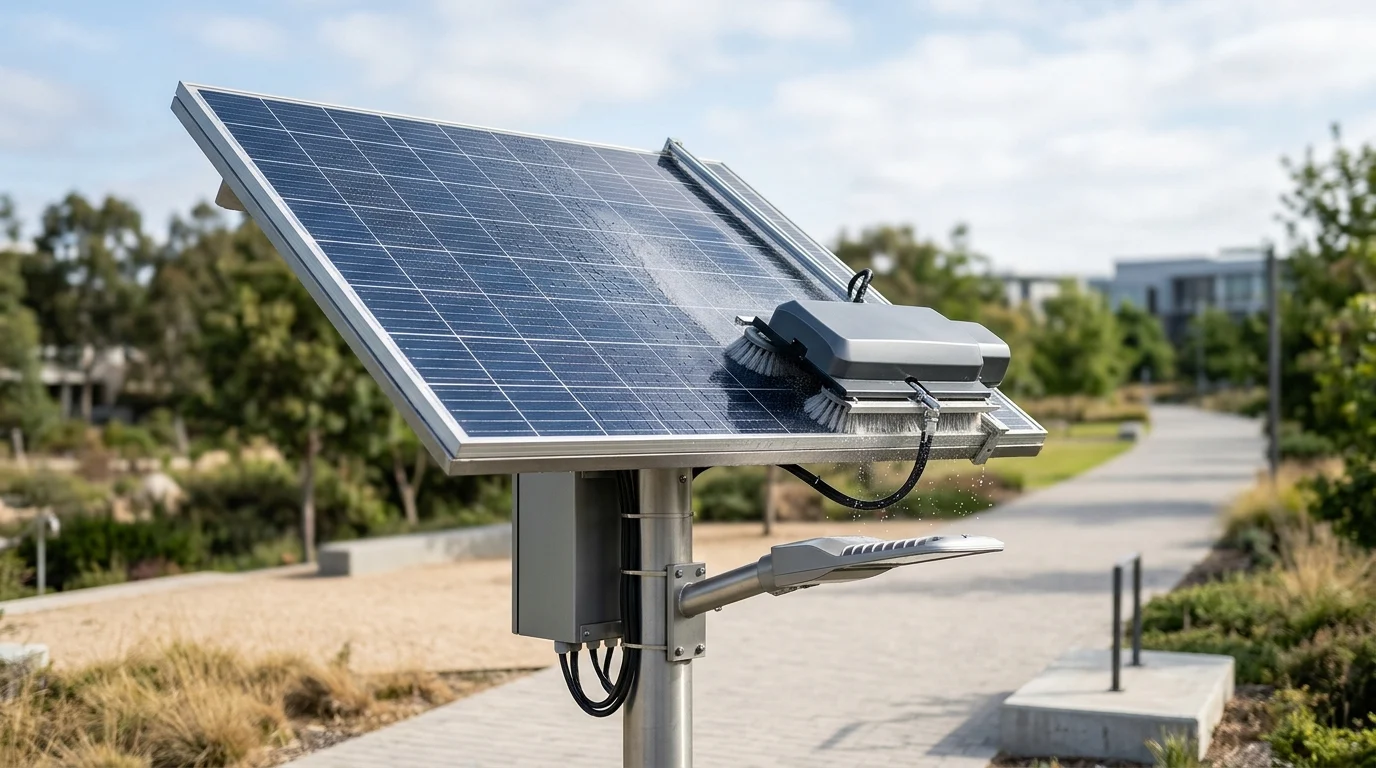
The industry primarily categorizes autonomous cleaning solutions into passive surface modifications and active mechanical systems. Passive approaches utilize advanced nanotechnology coatings that fundamentally alter the contact angle of water and dust on the glass substrate. Conversely, active systems rely on motorized actuators, robotics, or piezoelectric transducers to physically dislodge accumulated matter. While more complex, active systems physically intervene to clear the panel surface. The choice between these paradigms depends heavily on the severity of local environmental contaminants and the available energy budget of the localized battery storage.
| Cleaning Method | Primary Mechanism | Parasitic Power Draw | Estimated Efficiency Recovery |
|---|---|---|---|
| Hydrophobic Coating | Repels water, prevents dust adhesion | 0% | 5% – 8% |
| Hydrophilic Coating | Sheets water wash away debris | 0% | 4% – 7% |
| Mechanical Brushing | Motorized wiper or rotating brush | 1% – 2% | 15% – 25% |
| Ultrasonic Vibration | Piezoelectric surface agitation | < 0.5% | 10% – 15% |
What criteria should procurement teams use when evaluating options?
When evaluating these distinct modalities, procurement teams must conduct a rigorous analysis of the total cost of ownership over a standard 10-to-15-year lifecycle. Mechanical systems offer superior cleaning efficacy for heavy soiling but introduce moving parts that are inherently susceptible to wear, requiring motor or brush replacements typically around the 5-year operational mark. Conversely, nanomaterial coatings demand zero ongoing parasitic power from the solar array but degrade under prolonged ultraviolet exposure. These chemical treatments often necessitate specialized reapplication every 3 to 5 years at an estimated cost ranging from $10 to $15 per square meter of panel surface. Decision-makers must accurately calculate the net energy gain by subtracting the active system’s operational power draw and maintenance burden from the total recovered photovoltaic yield.
How Should Buyers Specify, Validate, and Deploy Solar Light Poles
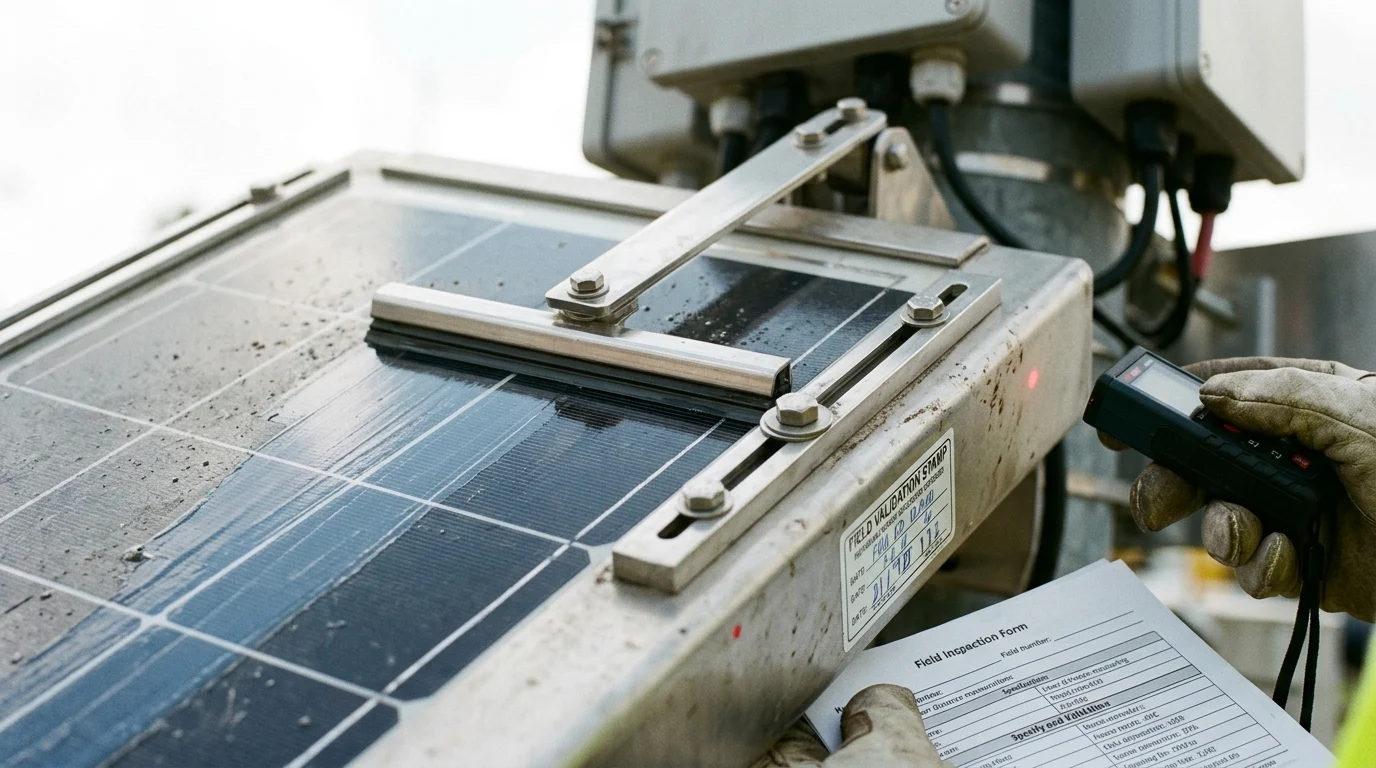
The successful deployment of self-cleaning solar light poles requires highly rigorous specifications during the initial tendering process, followed by systematic validation in the field environment. Ambiguous technical requirements or lax quality assurance protocols routinely lead to premature mechanical failures, compromised structural integrity, or rapidly degraded coating performance under harsh environmental stressors. Procurement professionals must bridge the gap between theoretical laboratory performance and real-world urban or industrial conditions. Without stringent standards, municipalities and private developers risk investing in premium infrastructure that fails to deliver the promised reduction in levelized cost of energy (LCOE).
What technical, compliance, and sourcing requirements should be specified?
Technical specifications must explicitly define durability thresholds and environmental resistance parameters to guarantee long-term viability. For active mechanical systems, buyers should strictly mandate a minimum ingress protection rating of IP65 for all motorized components, control boards, and sensors to prevent catastrophic moisture and dust penetration. Mechanical wipers and robotic elements must be certified for a minimum of 10,000 operational cycles without exhibiting significant degradation of the cleaning medium or the panel glass. Furthermore, the underlying photovoltaic modules must maintain full compliance with IEC 61215 testing standards, ensuring that the physical integration of vibration or brushing mechanisms does not induce destructive micro-cracks in the fragile silicon cells. Buyers must also require vendors to submit comprehensive accelerated weather testing data for any applied nanocoatings.
What implementation steps help ensure ROI and field reliability?
Field implementation should always commence with a tightly controlled, phased pilot program rather than an immediate, full-scale deployment.
Key Takeaways
- The most important conclusions and rationale for Solar Light Pole “Self-Cleaning” Technology: Cutting-Edge Technology to Improve Photovoltaic Conversion Efficiency
- Specs, compliance, and risk checks worth validating before you commit
- Practical next steps and caveats readers can apply immediately
Frequently Asked Questions
How does self-cleaning technology improve solar light pole efficiency?
It reduces dust and debris on the panel surface, so more sunlight reaches the photovoltaic cells. This helps maintain charging performance and can prevent lighting shortfalls during low-sun periods.
Which sites benefit most from self-cleaning solar light poles?
Arid, dusty, snowy, and industrial areas benefit most. These locations collect soiling quickly and often lack enough rainfall for natural cleaning.
What self-cleaning methods are commonly used?
Common options include hydrophobic or hydrophilic coatings, mechanical brushing, and ultrasonic vibration. The best choice depends on contamination level, power budget, and maintenance needs.
Do self-cleaning systems consume a lot of power?
Usually no. Coatings use no power, while active systems like brushing or vibration use a small amount of parasitic power to recover much more lost output.
How should buyers choose a cleaning solution for a solar light pole project?
Compare lifecycle cost, local weather, dust severity, and pole structure. For project-specific advice, ask for technical drawings and engineering support before procurement.