Introduction
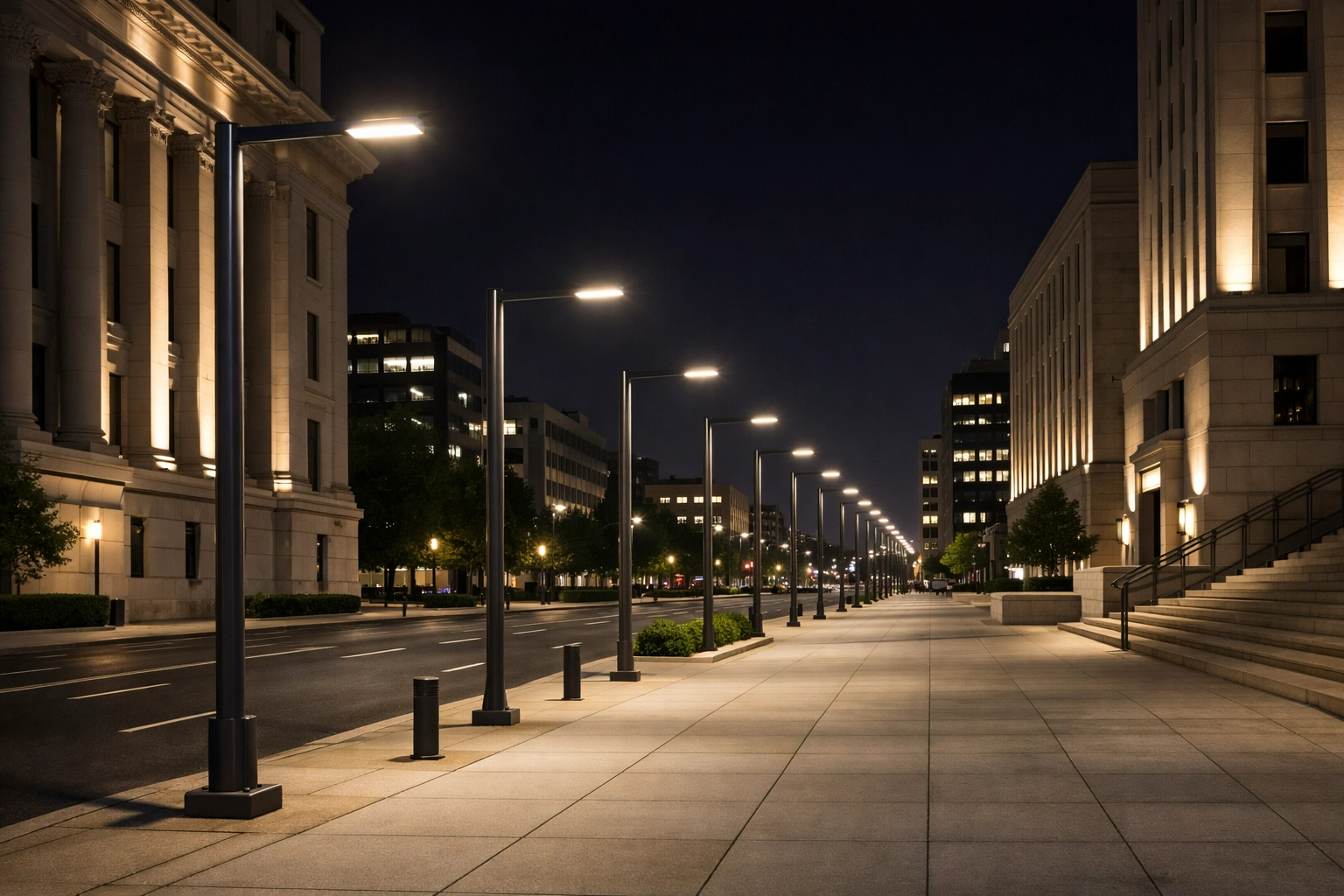
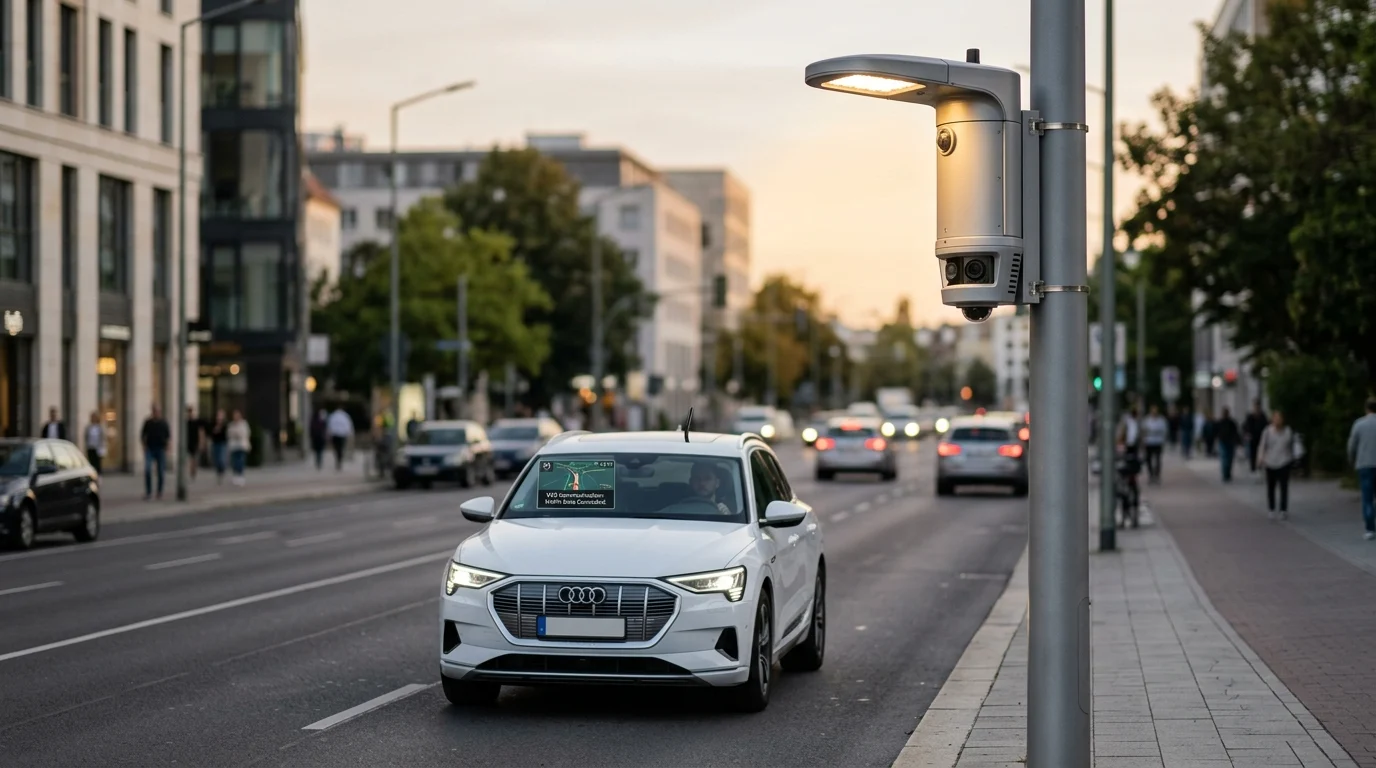
Connected vehicles need more than onboard sensors to navigate safely and efficiently; they also need a reliable view of the road beyond their immediate line of sight. Smart street lights can provide that missing layer by combining power, elevation, communications hardware, and roadside sensing into a ready-made urban platform for V2X networks. This article explains why streetlights are uniquely suited to become distributed roadside units, how they improve safety and traffic flow, and what technical roles they play in supporting autonomous and connected mobility. From intersection awareness to real-time data exchange, the discussion sets up how ordinary lighting infrastructure can become the “eyes” of future transportation.
Why Smart Streetlights and V2X Work Better Together
The integration of smart streetlights with Vehicle-to-Everything (V2X) architecture represents a pivotal shift in intelligent transportation systems. By transforming passive municipal infrastructure into active, networked hubs, urban planners can establish a ubiquitous grid of Roadside Units (RSUs) without the prohibitive costs of acquiring new real estate. Streetlights offer uninterrupted power supplies, optimal elevations, and strategic positioning along roadways, making them the most logical physical foundation for the sensory and communication networks required by autonomous and connected vehicles.
Key mobility and safety drivers
The primary catalyst for merging lighting infrastructure with V2X technology is the urgent need to mitigate traffic incidents and optimize vehicular flow. The National Highway Traffic Safety Administration (NHTSA) estimates that fully implemented V2X systems could prevent or reduce the severity of up to 80% of non-impaired multi-vehicle crashes. By mounting sensors on streetlights, transportation networks gain an elevated, unobstructed vantage point that eliminates blind spots at complex intersections and sharp curves.
Furthermore, this infrastructure enables proactive traffic management. Real-time data gathered from these elevated vantage points allows traffic control systems to dynamically adjust signal phasing, reducing urban congestion and lowering greenhouse gas emissions by an estimated 15% to 20% in high-density corridors.
Core components and roles
Transforming a standard streetlight into a V2X-enabled node requires a sophisticated payload of hardware. The core components include high-resolution optical cameras, LiDAR sensors, and radio transceivers capable of broadcasting Basic Safety Messages (BSMs). These sensors act as the “eyes” of the network, capturing granular environmental data that individual vehicle sensors might miss due to occlusion.
Physically, deploying RSUs at standard streetlight heights of 8 to 12 meters provides the optimal line-of-sight required for high-frequency radio waves. This elevation minimizes signal degradation caused by heavy vehicles, foliage, and urban architecture, ensuring reliable transmission of critical safety data between the infrastructure and the onboard units (OBUs) of passing vehicles.
How Smart Streetlights Support V2X Operations
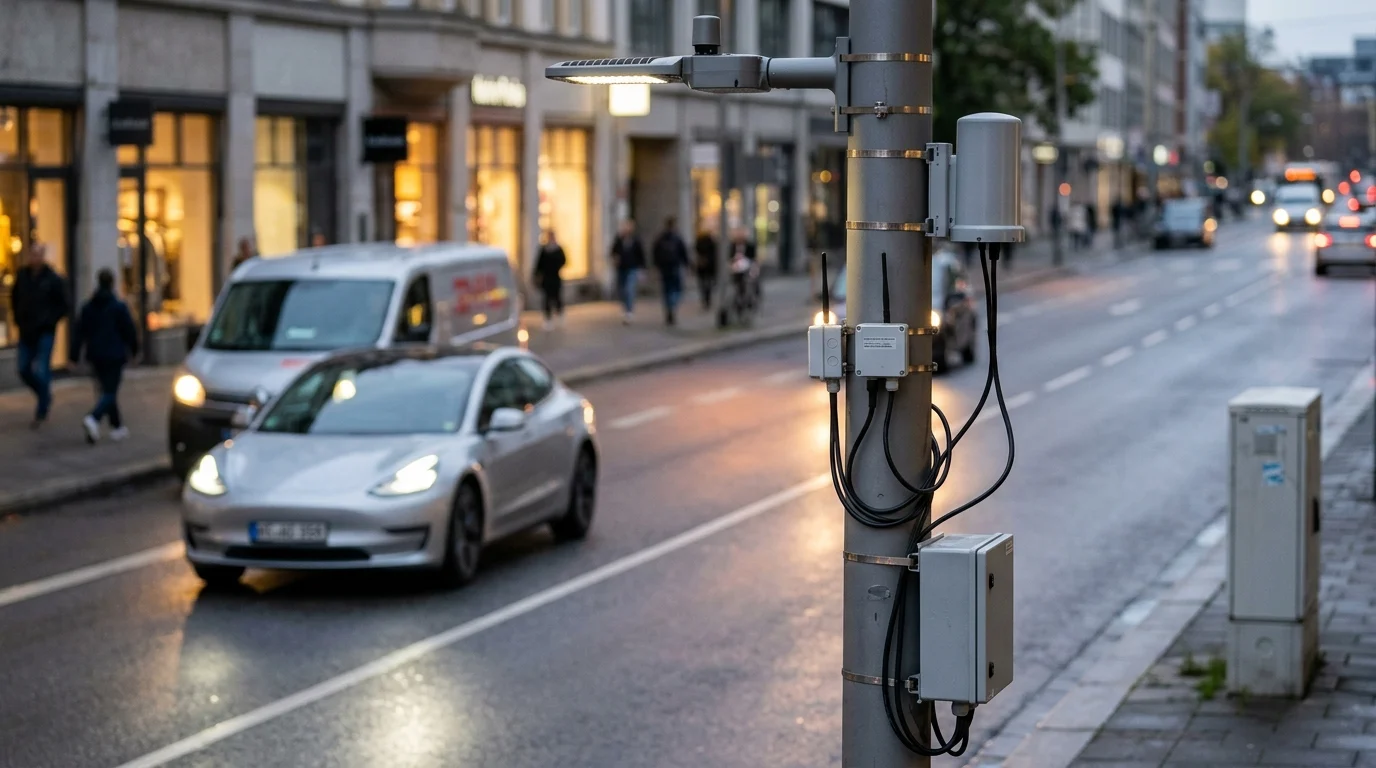
To effectively serve as the nervous system of future transportation, smart streetlights must go beyond mere data collection. The architecture demands high-speed data transmission and localized processing to ensure that time-critical safety alerts reach vehicles instantaneously. This operational imperative shifts the focus toward advanced connectivity protocols and edge computing capabilities embedded directly within the luminaire or the pole base.
Sensing, connectivity, and edge computing
The success of V2X relies heavily on ultra-reliable low-latency communication (URLLC). When a smart streetlight detects a pedestrian stepping into a crosswalk, that information must be processed and transmitted to approaching vehicles within milliseconds. To achieve this, modern smart poles integrate Multi-Access Edge Computing (MEC) modules. By processing sensor data locally at the edge rather than routing it to a centralized cloud server, the system can reduce round-trip latency to sub-10 milliseconds.
Connectivity is typically facilitated by dual-mode transceivers supporting both Dedicated Short-Range Communications (DSRC) and cellular V2X (C-V2X). This hybrid approach ensures backward compatibility with legacy connected vehicles while leveraging the superior range and bandwidth of 5G networks for advanced autonomous coordination.
Performance and evaluation criteria
Evaluating the performance of a streetlight-mounted V2X network requires analyzing several technical thresholds. Municipalities and network engineers benchmark these systems based on latency, effective range, and data throughput. The choice of communication protocol dictates the hardware specifications of the RSU and the density of the deployment.
The following table outlines the comparative performance metrics of standard V2X communication protocols when deployed on urban streetlight infrastructure:
| Protocol | Average Latency | Effective Range | Peak Data Rate | Primary Use Case |
|---|---|---|---|---|
| DSRC (IEEE 802.11p) | < 2 ms | Up to 300 meters | 27 Mbps | Time-critical Basic Safety Messages (BSM) |
| 4G LTE C-V2X | < 20 ms | Up to 500 meters | 100 Mbps | Traffic flow optimization, hazard warnings |
| 5G C-V2X (Release 16) | < 1 ms | Up to 1,000 meters | > 1 Gbps | Sensor sharing, advanced autonomous driving |
Deployment, Compliance, and Investment Priorities
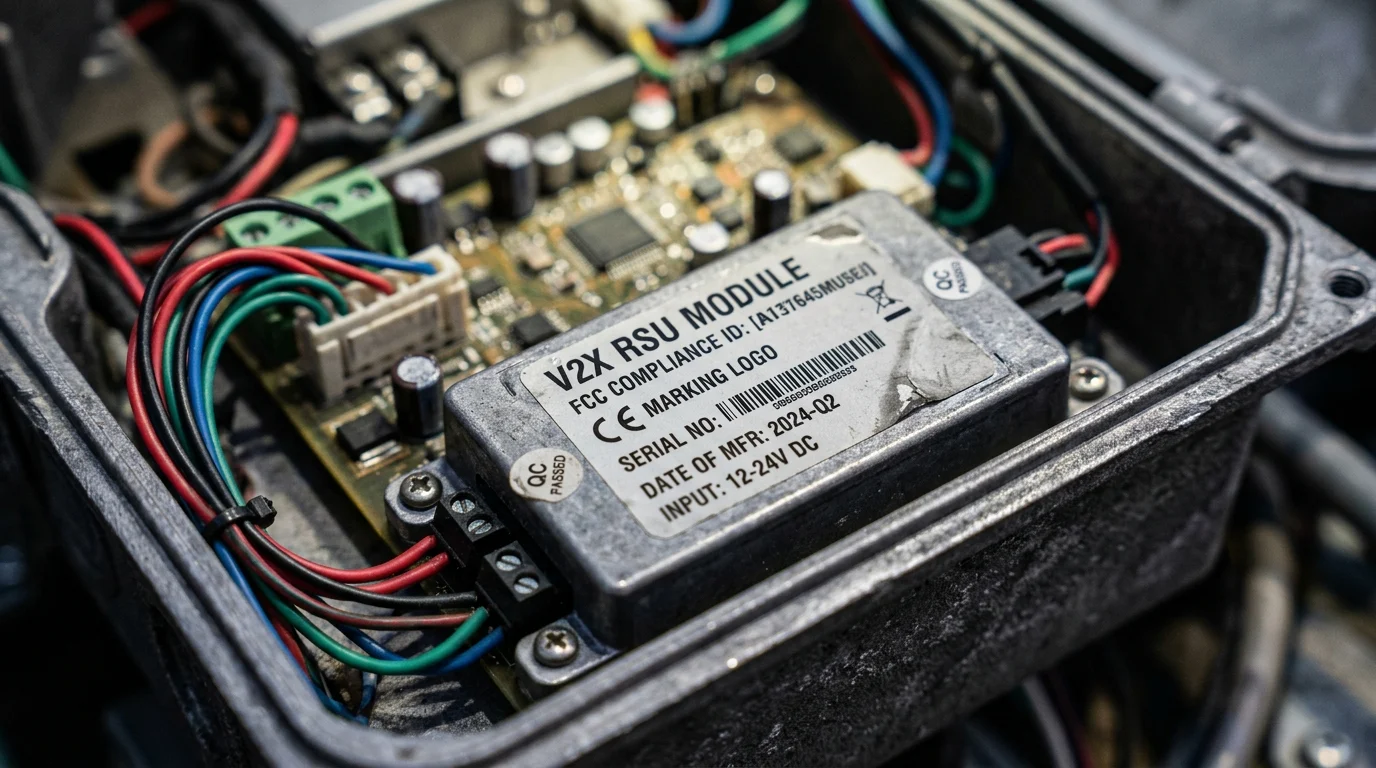
Transitioning V2X streetlight networks from pilot programs to city-wide deployments involves navigating rigorous technical standards and complex financial models. Stakeholders must ensure that the chosen hardware aligns with global telecommunications standards while balancing the substantial upfront capital expenditure against long-term operational efficiencies and safety benefits.
Implementation and interoperability requirements
Interoperability remains the most critical hurdle in large-scale V2X deployment. Smart streetlights must comply with global standards, such as the 3GPP Release 16 specifications for 5G C-V2X, to ensure seamless communication with vehicles from any manufacturer. Furthermore, the physical integration of these modules requires standardized interfaces. Many modern deployments utilize ANSI C136.41 7-pin receptacles, which allow for plug-and-play installation of intelligent nodes on top of the luminaire.
Environmental resilience is another non-negotiable compliance factor. Because streetlights are exposed to extreme weather, the integrated V2X housings must carry minimum ingress protection ratings of IP65 or IP66. They must also maintain thermal stability across operating temperatures ranging from -40°C to +85°C, ensuring that delicate edge computing components do not fail during peak summer heat or severe winter freezes.
Decision factors for cities and operators
Financial viability dictates the pace of municipal adoption. Upgrading a standard LED pole to a fully equipped V2X smart pole requires a capital investment ranging from $2,500 to $8,000 per unit, depending on the complexity of the sensor payload and the edge processing capacity. For a mid-sized city requiring thousands of nodes to achieve continuous coverage, this represents a massive infrastructural investment.
To justify the expenditure, operators must evaluate multi-layered return on investment (ROI) models.
Key Takeaways
- The most important conclusions and rationale for the synergy between smart streetlights and vehicle-to-everything (V2X) technology: building the “eyes” of future transportation.
- Specs, compliance, and risk checks worth validating before you commit
- Practical next steps and caveats readers can apply immediately
Frequently Asked Questions
Why are smart streetlights a strong base for V2X deployment?
They already provide roadside power, height, and spacing for RSUs, cameras, and radios, reducing civil works and speeding deployment on urban corridors.
What pole features matter most for V2X streetlight projects?
Focus on load capacity, 8–12 m mounting height, cable management, access doors, corrosion protection, and space for sensors, radios, and edge devices.
Can Morelux support custom smart pole requirements for V2X projects?
Yes. Morelux supplies customized steel and aluminum smart poles, technical drawings, engineer support, and manufacturing for roadway and infrastructure projects.
How quickly can buyers get a quote and technical support?
Morelux emphasizes fast response, including 24-hour quotes, plus practical engineering support to help sourcing teams review pole specifications and project fit.
Which V2X communication option is best for streetlight networks?
It depends on the use case: DSRC suits time-critical safety messages, while C-V2X and 5G support longer range, higher bandwidth, and advanced traffic coordination.