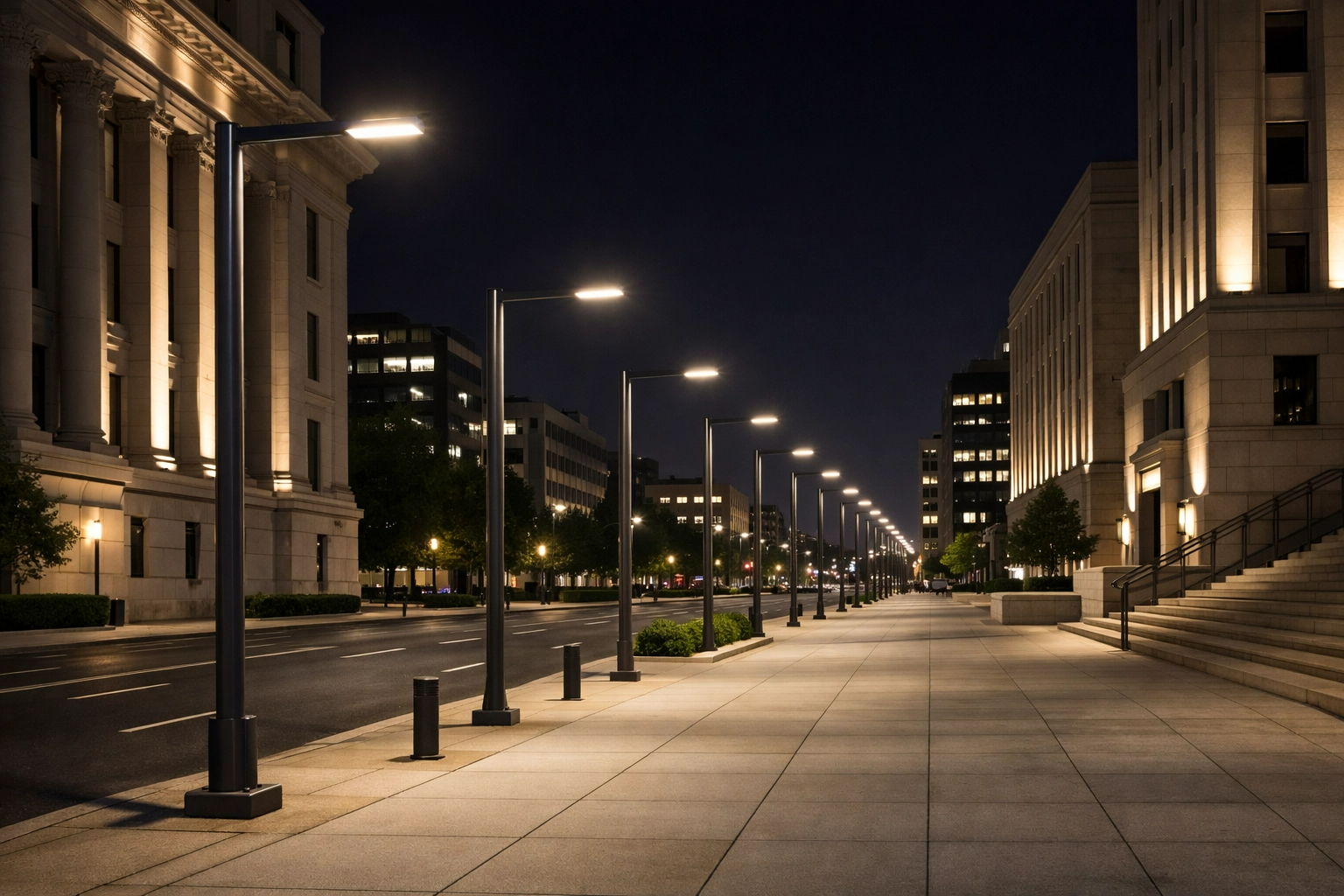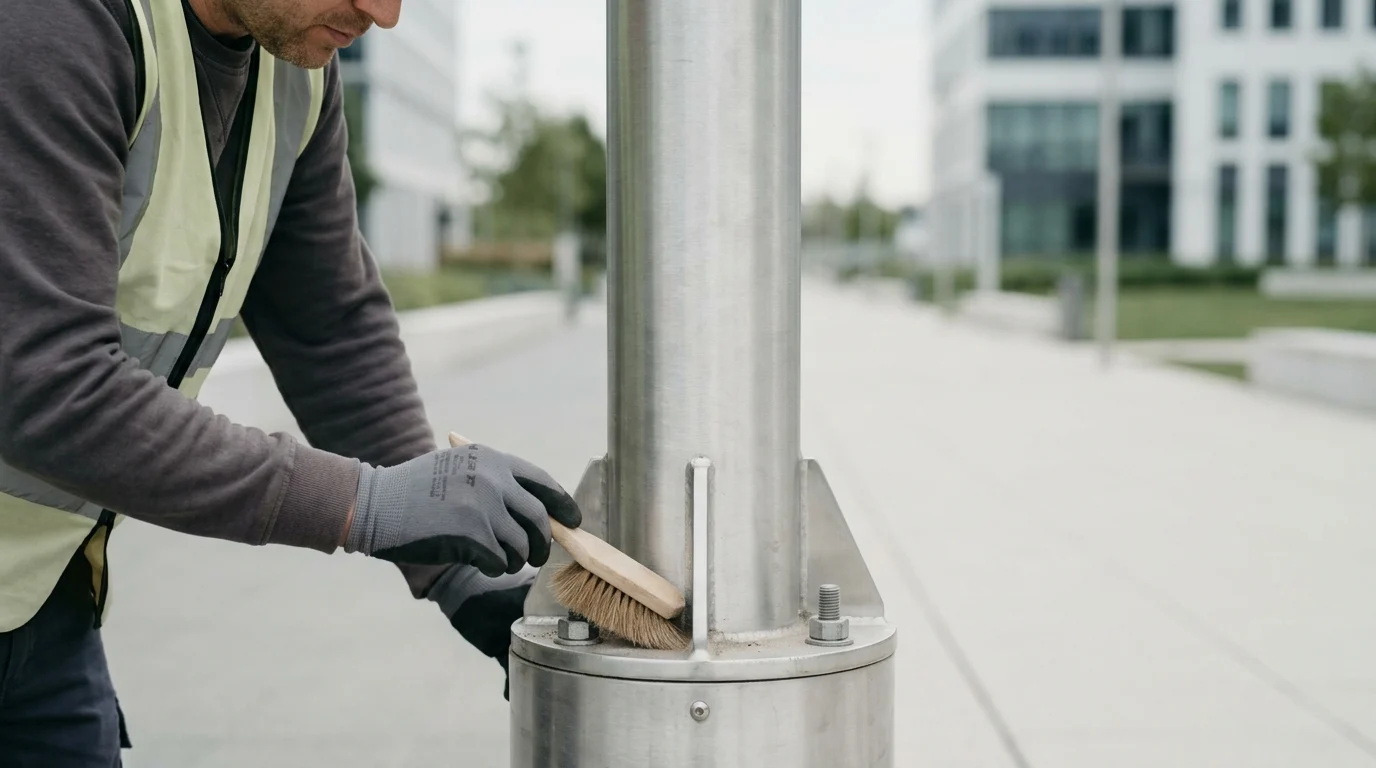
Osiągnięcie 30-letniego okresu użytkowania aluminiowych słupów oświetleniowych zależy w mniejszym stopniu od samego metalu, a bardziej od zdyscyplinowanego planu konserwacji. Although aluminum resists rust, poles still face fatigue, base damage, galvanic corrosion, vibration, and accelerated wear in coastal, industrial, or high-wind locations. This article explains jak konserwować aluminiowe słupy oświetleniowe
Dlaczego konserwacja aluminiowych słupów oświetleniowych ma znaczenie
Podstawą jest zrozumienie, jak konserwować aluminiowe słupy oświetleniowe maksymalizując zwrot z inwestycji w infrastrukturę. While aluminum is inherently resistant to atmospheric corrosion due to its naturally occurring oxide layer, it is not impervious to structural fatigue, galvanic corrosion, or extreme environmental stressors. Osiągnięcie wzorcowego 30-letniego okresu użytkowania wymaga przejścia od napraw reaktywnych do sformalizowanej strategii zarządzania aktywami.
Lifecycle Cost, Uptime, and Liability
Zarządzający aktywami muszą oceniać konserwację przez pryzmat całkowitego kosztu posiadania. The capital expenditure of a commercial aluminum light pole ranges from $800 to $2,500, but the liability of a structural failure can trigger legal and property damage claims exceeding $100,000 per incident. Implementing an annualized preventive maintenance program typically costs between $15 and $30 per pole, ensuring maximum uptime for roadway and pedestrian illumination while mitigating catastrophic liability risks.
Service Life and Site Conditions
Trajektoria słupa w kierunku 30-letniej żywotności jest w dużej mierze podyktowana jego lokalnym środowiskiem. Infrastruktura zainstalowana w strefach wiatru o prędkości do 150 mil na godzinę sklasyfikowanych przez AASHTO podlega szybszemu zmęczeniu w porównaniu ze słupami w strefach wiatru o prędkości 90 mil na godzinę. Furthermore, site-specific variables such as proximity to coastal salt spray, industrial chemical exposure, or heavy physical vibration from adjacent rail lines will accelerate material degradation, necessitating customized maintenance intervals rather than a uniform approach.
How to Build a Maintenance Program
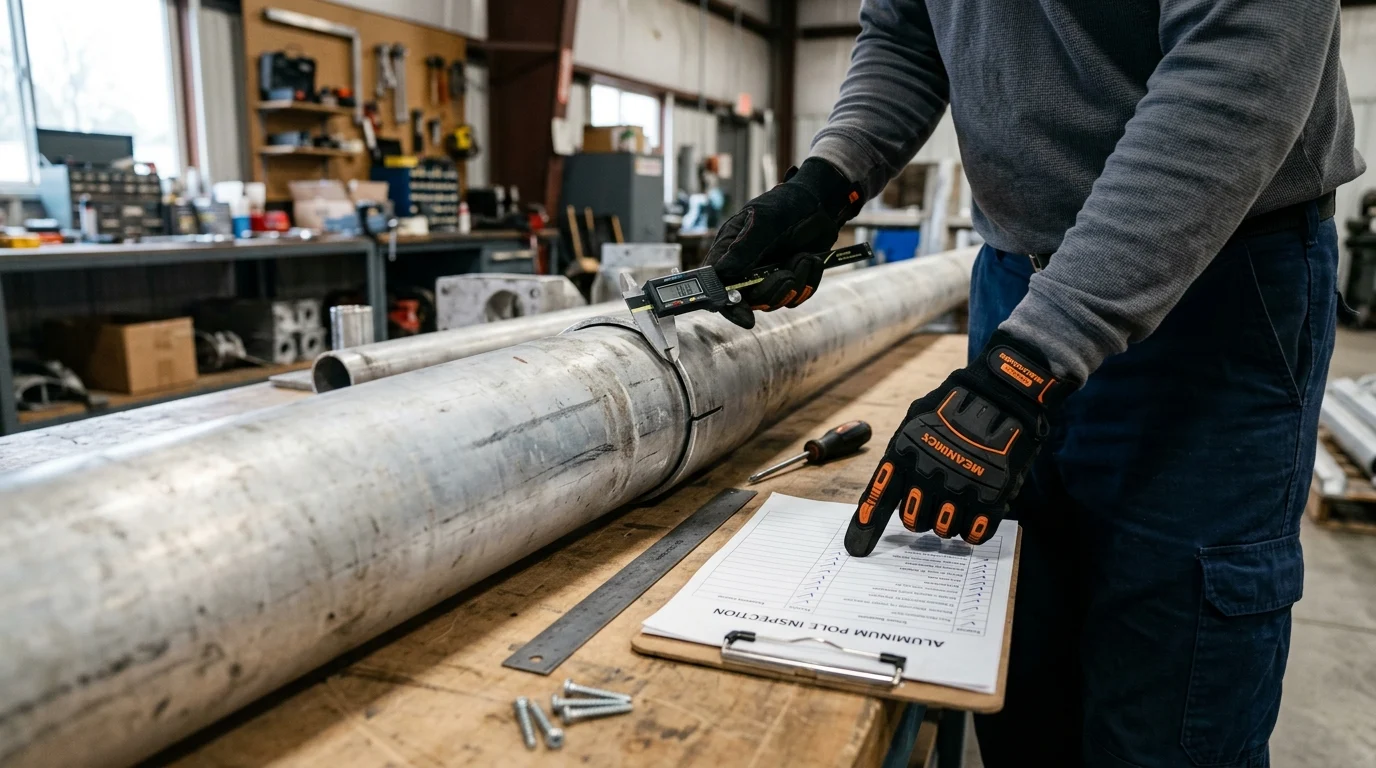
Odporne ramy konserwacji rozpoczynają się od kompleksowej inwentaryzacji i podstawowej oceny strukturalnej. Facility managers must catalog every asset, detailing physical specifications, installation dates, and environmental exposure classifications to build an actionable maintenance database.
Materiały słupów, wykończenia i konstrukcja podstawy
Aluminum alloys utilized in pole manufacturing, predominantly 6063-T6 and 6061-T6, offer yield strengths ranging from 25,000 to 35,000 psi. However, the preservation of this strength depends heavily on the surface finish and base configuration. Anodized finishes provide superior penetration resistance against chlorides, while powder-coated surfaces require periodic touch-ups to prevent localized oxidation. Anchor base designs demand rigorous inspection of the base plate and grout pad, whereas direct burial poles require targeted soil-to-air interface monitoring.
Common Failure Modes and Inspection Priorities
Inspectors must prioritize the identification of vibration-induced fatigue, particularly at the heat-affected zone (HAZ) directly above the base weld. Another critical failure mode is galvanic corrosion, which occurs when aluminum interacts with dissimilar metals, such as steel anchor bolts, in the presence of an electrolyte. A structural engineering review is mandatory if an inspection reveals a wall thickness loss exceeding 10% or any visible micro-cracking along the primary weld seams.
Standards, Manufacturer Guidance, and Records
Maintenance protocols should align with industry benchmarks, specifically the AASHTO LTS-6 specifications for structural supports. Manufacturers typically provide torque specifications for anchor bolts—often requiring tightening to one-third turn past snug-tight—which must be verified during initial and subsequent inspections. Maintaining a digital twin or a centralized Geographic Information System (GIS) database ensures that torque logs, inspection dates, and material specifications are retained for the entire 30-year lifecycle.
Przeglądy i konserwacja zapobiegawcza w praktyce
Przełożenie teoretycznych planów konserwacji na wykonalną realizację w terenie wymaga standardowych procedur. Field technicians must be equipped with precise schedules and protocols tailored to the specific degradation mechanisms present in their geographic region.
Inspection Schedules by Environment
Częstotliwość przeglądów musi być dostosowana do surowości środowiska pracy. Strefy przybrzeżne lub strefy przemysłu ciężkiego wymagają intensywnego monitorowania, podczas gdy łagodne środowiska śródlądowe pozwalają na dłuższe odstępy czasu.
| Klasyfikacja środowiska | Exposure Characteristics | Recommended Inspection Interval | Zakres kontroli wizualnej | NDT Requirement |
|---|---|---|---|---|
| Łagodny / śródlądowy | Niska wilgotność, brak soli, stabilne wiatry | Every 4 to 5 Years | Płyta podstawy, uchwyt, oprawa | Post-storm events |
| Moderate / Urban | Sole odladzające, umiarkowane wibracje komunikacyjne | Co 2 do 3 lat | Base bolts, coating integrity | Próbkowanie losowe 10%. |
| Severe / Coastal | Silna mgła solna, strefy huraganowego wiatru | Rocznie | Galvanic isolation, HAZ welds | Szwy spawalnicze wysokiego ryzyka |
Czyszczenie, ochrona powierzchni i kontrola korozji
Routine cleaning extends the efficacy of surface finishes. Poles exposed to road salts or marine environments should be washed annually using a neutral pH detergent (pH 6.0 to 8.0) and low-pressure water (under 1,500 psi) to remove chloride deposits without stripping protective coatings. To control galvanic corrosion, technicians must ensure that dielectric pads or isolation washers remain intact between the aluminum base plate and steel leveling nuts.
Repair vs Replacement Decisions
Zarządzający aktywami muszą ustalić obiektywne progi pomiędzy naprawą a wymianą. Superficial damage, such as cosmetic scratches or minor oxidation, can be mitigated in the field with industrial-grade zinc-rich primers and color-matched topcoats. However, if non-destructive testing (NDT) reveals structural anomalies—such as crack propagation in the HAZ, deformation of the base plate, or wall thickness degradation exceeding 15%—immediate replacement is the only viable engineering decision to maintain site safety.
Jak porównać koszty konserwacji i ryzyko
Optymalizacja budżetu na konserwację wymaga szczegółowego zrozumienia powiązanych zmiennych finansowych zarządzanie słupami świetlnymi. Decydenci muszą porównać przewidywalne koszty proaktywnej obsługi ze zmiennymi wydatkami interwencji awaryjnych.
Konserwacja rutynowa a naprawcza
The financial disparity between routine and corrective maintenance is stark. A comprehensive routine inspection, encompassing visual checks and bolt torque verification, typically costs $40 to $70 per pole. Conversely, a corrective emergency replacement—necessitated by a neglected structural failure—can escalate to $3,500 to $6,000 per pole when factoring in expedited material procurement, emergency labor rates, and immediate site remediation.
Praca, dostęp, kontrola ruchu i czynniki pogodowe
Logistical factors heavily influence maintenance expenditures. Deploying bucket trucks or aerial lifts for luminaire and upper-pole inspections incurs significant hourly equipment costs. Furthermore, in urban or high-traffic environments, compliance with the Manual on Uniform Traffic Control Devices (MUTCD) for lane closures and flaggers can inflate total labor costs by 40% to 60%. Weather constraints, such as high sustained winds or freezing temperatures, also dictate operational windows, potentially delaying critical access and extending contractor billable hours.
Kryteria wyboru wykonawców i zamówień publicznych
Zamawianie zewnętrznych usług konserwacyjnych wymaga rygorystycznej weryfikacji. Contractors must possess specific qualifications, including ASNT Level II certification for any required non-destructive testing of critical welds. Procurement criteria should also mandate a minimum of $2 million in general liability insurance, documented experience with aluminum infrastructure, and the capacity to provide digitally logged, geocoded inspection reports compatible with the facility’s centralized asset management software.
Condition-Based Planning and Documentation

Długoterminowa odporność infrastruktury opiera się na planowaniu opartym na warunkach. By systematically documenting asset health, organizations can accurately forecast capital expenditures and optimize the remaining service life of their lighting networks.
Condition Ratings and Remaining Service Life
Implementing a standardized condition rating system allows asset managers to triage maintenance interventions and project the Remaining Service Life (RSL) of each pole.
| Condition Rating | Integralność strukturalna | Surface & Finish Condition | Szacowany RSL | Zalecane działanie |
|---|---|---|---|---|
| 1 – Doskonale | No defects, bolts properly torqued | Powłoka nienaruszona, bez utleniania | 25+ lat | Standard routine inspection |
| 2 – Dobrze | Niewielkie poluzowanie śruby | Powierzchowne zadrapania | 15 – 25 Years | Re-torque bolts, monitor |
| 3 – Fair | Moderate oxidation at base | Miejscowe uszkodzenie powłoki | 5 – 15 Years | Spot treat finish, schedule NDT |
| 4 – Biedny | Wykrywalne przerzedzenie ścian (<10%) | Severe pitting, galvanic action | 1 – 5 lat | Immediate remediation plan |
| 5 – Krytyczny | Visible weld cracking, >15% loss | Total coating failure | < 1 Year | Wycofać z eksploatacji i wymienić |
Budgeting, Documentation, and Performance Metrics
Skuteczna dokumentacja przekształca surowe dane z kontroli w przydatne wskaźniki wydajności. Asset managers should track the Mean Time Between Failures (MTBF) and overall network compliance rates to refine future procurement specifications. Dla sustainable financial planning, organizations should establish an annual operational expenditure (OPEX) budget equivalent to 1.5% to 2.5% of the total asset replacement value, ensuring sufficient capital is reserved for both routine upkeep and scheduled end-of-life replacements.
Kluczowe dania na wynos
- Najważniejsze wnioski i uzasadnienie konserwacji aluminiowych słupów oświetleniowych
- Specyfikacje, zgodność i kontrole ryzyka warte sprawdzenia przed zatwierdzeniem
- Praktyczne kolejne kroki i zastrzeżenia, które czytelnicy mogą zastosować natychmiast
Często zadawane pytania
Jak często należy sprawdzać aluminiowe słupy oświetleniowe?
Use site conditions as the guide: every 4–5 years inland, every 2–3 years in urban salt or vibration exposure, and annually in coastal or severe wind zones.
Jakie obszary wymagają największej uwagi podczas konserwacji?
Check the base weld heat-affected zone, handhole, base plate, anchor bolts, coating damage, and any aluminum-to-steel contact points where galvanic corrosion can start.
How can galvanic corrosion on aluminum light poles be prevented?
Keep aluminum isolated from dissimilar metals with proper washers, sleeves, or coatings, and clean off salt, moisture, and debris that act as electrolytes.
When should a pole be reviewed by an engineer?
Poproś o przegląd techniczny, jeśli stwierdzisz widoczne pęknięcia spoin, poluzowane elementy podstawy, uszkodzenia udarowe lub utratę grubości ścianki powyżej 10%.
Czy Morelux może wspierać indywidualne planowanie konserwacji dla nabywców projektów?
Tak. Morelux can support pole specifications, technical drawings, and practical maintenance guidance so buyers can match inspection plans to coastal, roadway, solar, or smart pole projects.