Business Professionals
Lorem ipsum dolor sit amet, consectetur adipiscing elit aliquam.
 Get A Quote
Engineered aluminium lighting poles for highway, garden, solar, and project-based infrastructure procurement with reliable customization and lifecycle durability.
Aluminium lighting poles are increasingly specified for roadway, garden, municipal, and commercial outdoor projects because buyers need lower corrosion risk, lighter logistics, and predictable long-term appearance. Aluminium 6063-T6 provides a strong balance of formability, finish quality, and structural stability, while conical and cylindrical profiles support both high-load roadway applications and architectural landscape lighting. For procurement teams comparing lifecycle cost, pole manufacturing method, coating specification, and installation environment can affect maintenance budgets more than the initial pole price.
Morelux supplies project-oriented aluminium pole options including the Heavy-Duty Aluminium Lighting Pole for highways and main roads, the Robust Garden Lighting Pole for durable outdoor landscapes, and the Solar Garden Light with diffused vertical illumination. For engineering teams evaluating fabrication quality, the comparison of aluminium pole spinning versus welding is especially relevant because seamless spinning can improve concentricity to around ±0.5 mm and reduce scrap rates below 5% in repeat production.
Whether the requirement is a Ø152–203 mm bottom diameter roadway pole, a Ø127–140 mm garden pole, or a 1000 mm integrated solar garden light, the best specification starts with wind load, corrosion class, finish durability, quantity, and maintenance access.
@keyframes mlFadeA{from{opacity:0;transform:translateY(28px)}to{opacity:1;transform:translateY(0)}}@keyframes mlBadgeA{0%,100%{transform:scale(1)}50%{transform:scale(1.04)}}.ml-guide-a{animation:mlFadeA .6s ease;background:rgba(0,0,0,.03);border:1px solid rgba(0,0,0,.16);border-radius:16px;padding:28px;margin:22px 0;color:#000000;box-shadow:0 12px 30px rgba(0,0,0,.10)}.ml-guide-a h3,.ml-guide-a h4{color:#000000;margin-top:0}.ml-guide-a p{color:#000000;line-height:1.65}.ml-table-a{width:100%;border-collapse:collapse;margin:18px 0;color:#000000}.ml-table-a th{background:linear-gradient(135deg,#000000,#000000);color:#000000;padding:12px;text-align:left;border:1px solid rgba(0,0,0,.35)}.ml-table-a td{border:1px solid rgba(0,0,0,.20);padding:12px;vertical-align:top}.ml-table-a tr:hover{background:rgba(0,0,0,.06)}.ml-badge-a{display:inline-block;animation:mlBadgeA 2.2s infinite;background:#000000;color:#000000;border:1px solid #000000;border-radius:22px;padding:7px 14px;margin:5px;font-size:13px;font-weight:700}.ml-note-a{border-left:5px solid #000000;background:rgba(0,0,0,.06);padding:16px;margin:18px 0;border-radius:0 12px 12px 0;color:#000000}.ml-guide-a a{color:#000000;text-decoration:underline;font-weight:700}
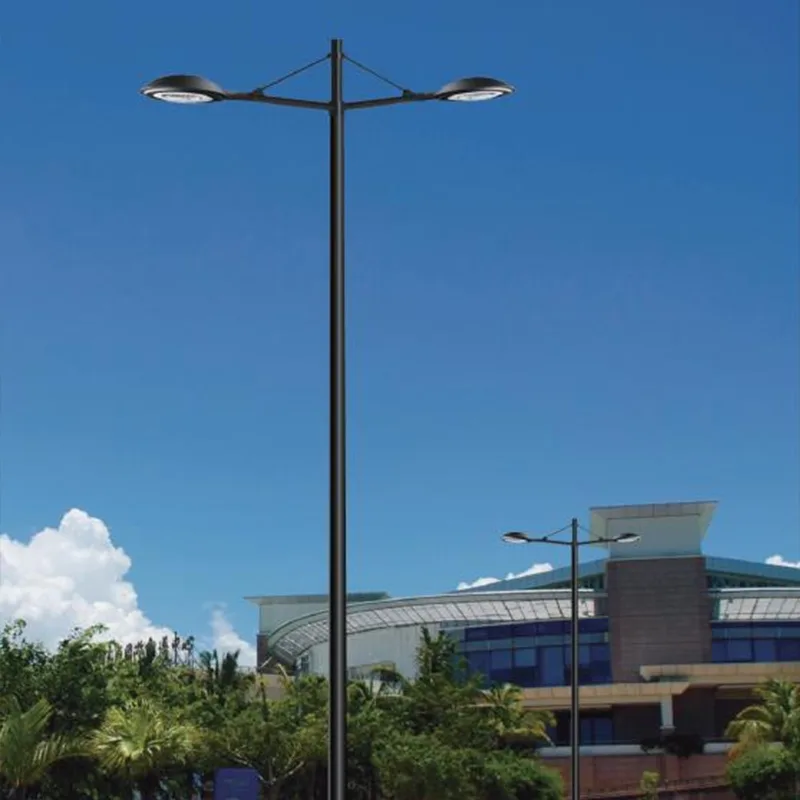
This scenario targets highway, arterial road, and main road lighting packages where structural repeatability, installation efficiency, and lifecycle finish performance matter at scale. The recommended product family is the Heavy-Duty Aluminium Lighting Pole for Highways and Main Road Applications, specified as a conical aluminium roadway pole made from Aluminium 6063-T6 with bottom diameter from Ø152 to 203 mm and top diameter from Ø89 to 140 mm.
| Parameter | Recommended Range | Procurement Impact |
|---|---|---|
| Material | Aluminium 6063-T6 | Balances extrusion quality, corrosion resistance, and formability for infrastructure-grade poles. |
| Geometry | Conical roadway profile | Improves stiffness-to-weight ratio and supports consistent visual alignment across long corridors. |
| Bottom Diameter | Ø152–203 mm | Gives buyers a practical range for higher mounting heights and heavier luminaire brackets. |
| Top Diameter | Ø89–140 mm | Supports compatibility with common roadway luminaires, arms, and tenon configurations. |
| Process Review | Spinning for repeat batches; welding for heavy-wall special designs | Use the spinning vs. welding process comparison to match volume and strength requirements. |
For roadway programs, small differences in pole weight, straightness, and finish consistency multiply quickly across hundreds of units. Seamless spinning can keep scrap below 5% and deliver tighter concentricity, often around ±0.5 mm, which helps pole-to-pole visual alignment and coating uniformity. For repeat orders above 300–500 units, tooling amortization can make spun aluminium poles commercially attractive compared with labor-intensive welded assemblies.
@keyframes mlStepInB{from{opacity:0;transform:translateX(-32px)}to{opacity:1;transform:translateX(0)}}@keyframes mlPulseB{0%,100%{box-shadow:0 0 0 0 rgba(0,0,0,.25)}50%{box-shadow:0 0 0 10px rgba(0,0,0,.02)}}.ml-guide-b{background:rgba(0,0,0,.025);border:1px solid rgba(0,0,0,.15);border-radius:18px;padding:28px;margin:22px 0;color:#000000;box-shadow:0 10px 28px rgba(0,0,0,.09)}.ml-guide-b h3,.ml-guide-b h4{color:#000000}.ml-guide-b p,.ml-guide-b li{color:#000000;line-height:1.65}.ml-steps-b{counter-reset:step;margin:18px 0;padding:0}.ml-step-b{list-style:none;animation:mlStepInB .55s ease both;background:rgba(0,0,0,.04);border:1px solid rgba(0,0,0,.14);border-radius:14px;padding:18px 18px 18px 64px;margin:14px 0;position:relative}.ml-step-b:before{counter-increment:step;content:counter(step);position:absolute;left:18px;top:18px;width:30px;height:30px;border-radius:50%;background:#000000;color:#000000;display:flex;align-items:center;justify-content:center;font-weight:800}.ml-step-b:nth-child(2){animation-delay:.08s}.ml-step-b:nth-child(3){animation-delay:.16s}.ml-step-b:nth-child(4){animation-delay:.24s}.ml-step-b:nth-child(5){animation-delay:.32s}.ml-benefit-b{display:block;margin-top:8px;padding:10px;border-left:4px solid #000000;background:rgba(0,0,0,.05);border-radius:0 10px 10px 0}.ml-badge-b{display:inline-block;animation:mlPulseB 2.4s infinite;border:1px solid #000000;background:#000000;color:#000000;border-radius:20px;padding:7px 13px;margin:5px;font-weight:700;font-size:13px}.ml-guide-b a{color:#000000;text-decoration:underline;font-weight:700}
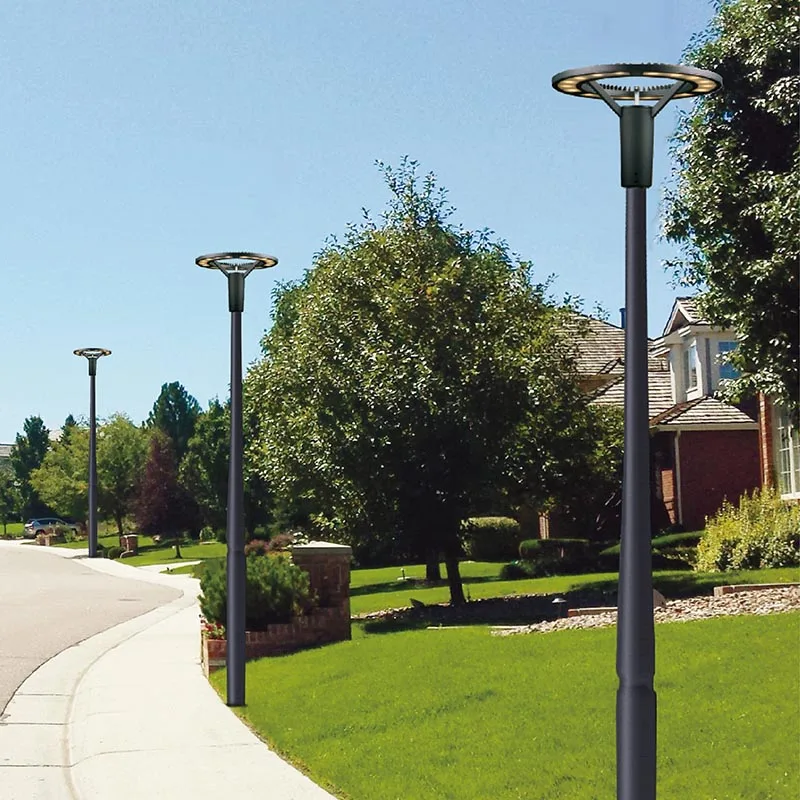
This workflow is built for landscape contractors, developers, and municipal park buyers specifying the Robust Garden Lighting Pole for durable and project-oriented applications. The product is an Aluminium 6063-T6 garden lighting pole with a cylindrical robust profile and Ø127–140 mm bottom diameter, making it suitable for pedestrian-scale outdoor zones where appearance, stability, and batch consistency are equally important.
Map the project by exposure level: protected residential gardens, open campuses, coastal walkways, or high-traffic commercial landscapes.
Benefit: early exposure classification prevents under-specifying the surface finish and reduces premature repainting risk.
Use the Ø127–140 mm bottom diameter range to coordinate pole stiffness, fixture size, mounting method, and spacing plans.
Benefit: coordinated drawings reduce mismatch between pole, base, anchor, and luminaire components during installation.
For standard C3 or lower environments, powder coating is practical. For aggressive coastal or high-UV projects, review PVDF versus powder coating weathering.
Benefit: PVDF can support long-term color retention where field maintenance access is expensive.
Confirm color, gloss level, and surface texture before mass production, especially for branded retail parks or hotel landscapes.
Benefit: sample approval helps avoid batch color disputes and schedule delays.
Group poles, anchors, caps, and accessories by installation zone so site crews can unload sequentially.
Benefit: staged delivery can cut field handling time and lower installation rework.
For procurement teams, the best garden pole order is not simply the lowest unit price. It is the package that controls drawing accuracy, finish durability, packaging protection, and delivery sequencing across the full project.
@keyframes mlCardC{from{opacity:0;transform:translateY(24px) rotate(-1deg)}to{opacity:1;transform:translateY(0) rotate(0)}}@keyframes mlGlowC{0%,100%{filter:brightness(1)}50%{filter:brightness(1.15)}}.ml-guide-c{background:rgba(0,0,0,.025);border:1px solid rgba(0,0,0,.16);border-radius:18px;padding:28px;margin:22px 0;color:#000000;box-shadow:0 12px 32px rgba(0,0,0,.10)}.ml-guide-c h3,.ml-guide-c h4{color:#000000}.ml-guide-c p,.ml-guide-c li{color:#000000;line-height:1.65}.ml-cards-c{display:flex;flex-wrap:wrap;gap:16px;margin:18px 0}.ml-card-c{flex:1;min-width:230px;animation:mlCardC .6s ease both;background:rgba(0,0,0,.04);border:1px solid rgba(0,0,0,.18);border-radius:16px;padding:18px;transition:transform .25s ease,box-shadow .25s ease}.ml-card-c:hover{transform:translateY(-5px);box-shadow:0 14px 24px rgba(0,0,0,.14)}.ml-card-c:nth-child(2){animation-delay:.12s}.ml-card-c:nth-child(3){animation-delay:.24s}.ml-card-c ul{padding-left:18px}.ml-reco-c{border:1px solid #000000;background:rgba(0,0,0,.06);border-radius:14px;padding:18px;margin-top:18px}.ml-badge-c{display:inline-block;animation:mlGlowC 2s infinite;background:#000000;color:#000000;border:1px solid #000000;border-radius:22px;padding:7px 13px;margin:5px;font-size:13px;font-weight:700}.ml-guide-c a{color:#000000;text-decoration:underline;font-weight:700}
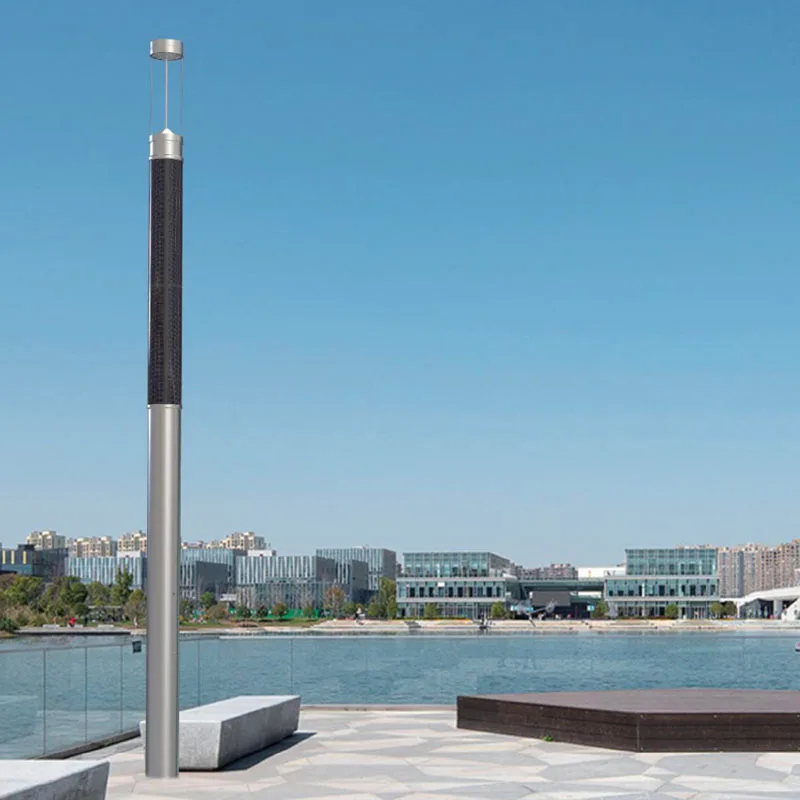
This decision format is for buyers evaluating low-height landscape lighting, pedestrian routes, plazas, residential common areas, and hospitality gardens. The Solar Garden Light with Diffused Vertical Illumination is a compact 1000 mm system using an Aluminium 6063-T6 pole, Ø203 mm diameter, metal powder coating, 10 W LED power, and 120 lm/W luminous efficacy.
Specify the integrated solar garden light when the business goal is rapid deployment, consistent appearance, and low-height diffused vertical illumination. For developers, the strongest value comes from reducing trenching complexity and standardizing a compact product across courtyards, resorts, and residential walkways. For larger public gardens, combine compact solar units with taller garden poles only where higher illuminance or wider spacing is required.
@keyframes mlFadeD{from{opacity:0;transform:scale(.97)}to{opacity:1;transform:scale(1)}}@keyframes mlLineD{from{width:0}to{width:100%}}.ml-guide-d{animation:mlFadeD .65s ease;background:rgba(0,0,0,.025);border:1px solid rgba(0,0,0,.16);border-radius:18px;padding:28px;margin:22px 0;color:#000000;box-shadow:0 12px 30px rgba(0,0,0,.10)}.ml-guide-d h3,.ml-guide-d h4{color:#000000}.ml-guide-d h3:after{content:””;display:block;height:3px;background:#000000;animation:mlLineD .9s ease;margin-top:10px}.ml-guide-d p,.ml-guide-d li{color:#000000;line-height:1.65}.ml-check-d{display:grid;grid-template-columns:repeat(auto-fit,minmax(240px,1fr));gap:12px;margin:18px 0;padding:0}.ml-check-d li{list-style:none;background:rgba(0,0,0,.04);border:1px solid rgba(0,0,0,.16);border-radius:12px;padding:14px;transition:transform .25s ease}.ml-check-d li:hover{transform:translateY(-4px)}.ml-deep-d{display:grid;grid-template-columns:repeat(auto-fit,minmax(260px,1fr));gap:16px;margin-top:18px}.ml-deep-card-d{background:rgba(0,0,0,.05);border-left:5px solid #000000;border-radius:0 14px 14px 0;padding:18px}.ml-badge-d{display:inline-block;background:#000000;color:#000000;border:1px solid #000000;border-radius:22px;padding:7px 13px;margin:5px;font-size:13px;font-weight:700}.ml-guide-d a{color:#000000;text-decoration:underline;font-weight:700}
This framework is designed for procurement managers buying custom aluminium lighting poles across road, garden, solar, and special infrastructure applications. It is most useful when quantities, climates, coatings, or bracket loads differ from a standard catalogue specification. The goal is to reduce technical ambiguity before purchase order release and prevent costly rework after production.
For repeat aluminium pole programs, spinning can reduce waste because it plastically forms a seamless tube and may keep scrap below 5%. It also supports tighter concentricity, often around ±0.5 mm. Welding remains essential for very heavy-wall structures or complex assemblies, but heat-affected zones may reduce local yield strength by 30% to 40% unless engineered correctly. Review the aluminium pole process comparison before finalizing custom designs.
Finish selection affects long-term appearance and maintenance budgets. PVDF systems meeting AAMA 2605 are associated with 10-year South Florida exposure requirements, while super-durable powders commonly align with AAMA 2604 and shorter thresholds. If a 30-foot pole requires field repainting, traffic control, lifts, and containment can push remediation above USD 1,500–2,000 per unit. Use the PVDF versus powder coating guide for climate-sensitive projects.
When suppliers answer these eight checklist items with measurable data, buyers can compare total project risk instead of unit price alone.
Standard aluminium lighting pole orders are typically planned around an 8–12 week production window, depending on quantity, coating, tooling, and drawing approval speed. Custom dimensions, special brackets, PVDF coating, or project-specific packaging can extend the schedule. Buyers can shorten lead time by providing pole height, diameter, wind load, finish color, base details, and target delivery date with the first inquiry.
MOQ depends on the complexity of the pole profile, tooling, surface finish, and accessory package. For repeat spun aluminium poles, production economics usually improve significantly above 300–500 units because mandrel and setup costs are spread across volume. Smaller project quantities may still be feasible, but unit cost may be higher when custom tooling, sample approval, or special coating batches are required.
Yes. Common customization options include pole height, bottom and top diameter, conical or cylindrical structure, base plate details, anchor bolt patterns, arm or bracket interface, access door location, finish color, and packaging method. Engineering review is recommended when the project involves high wind exposure, heavy luminaires, coastal environments, solar modules, sensor payloads, or non-standard installation foundations.
Powder coating is usually suitable for moderate environments such as commercial landscapes, parking areas, and projects where budget efficiency is the main driver. PVDF is recommended for coastal, high-UV, prestige, or difficult-access installations where long-term color retention and reduced maintenance are critical. The higher initial cost can be justified when field repainting would require lifts, traffic control, or site disruption.
Procurement teams should request technical drawing support, installation guidance, packing lists, finish documentation, and responsive communication for replacement parts or accessories. For larger projects, batch traceability and clear labeling by installation zone are valuable. Good after-sales support reduces commissioning delays, helps contractors match poles to foundations and luminaires, and simplifies future maintenance planning.
Export packing should protect coated surfaces from abrasion, moisture, and handling damage. Typical requirements include individual wrapping, reinforced bundling, end protection, pallet or cradle support, and container loading plans based on pole length and diameter. Buyers should confirm Incoterms, destination port, unloading method, jobsite access, and whether accessories such as anchor bolts, caps, and brackets ship with the same container.


@keyframes mlSlideCustom{from{opacity:0;transform:translateX(-36px)}to{opacity:1;transform:translateX(0)}}@keyframes mlFadeCustom{from{opacity:0}to{opacity:1}}@keyframes mlPulseCustom{0%,100%{box-shadow:0 0 0 0 rgba(0,0,0,.28)}50%{box-shadow:0 0 0 12px rgba(0,0,0,.02)}}.ml-custom{animation:mlFadeCustom .7s ease;background:linear-gradient(135deg,rgba(0,0,0,.06),rgba(0,0,0,.02));border:1px solid rgba(0,0,0,.18);border-radius:20px;padding:30px;margin:28px 0;color:#000000;box-shadow:0 14px 34px rgba(0,0,0,.10)}.ml-custom h2,.ml-custom h3,.ml-custom p{color:#000000}.ml-stat-grid{display:grid;grid-template-columns:repeat(auto-fit,minmax(190px,1fr));gap:16px;margin:20px 0}.ml-stat{animation:mlSlideCustom .6s ease both;background:rgba(0,0,0,.04);border:1px solid rgba(0,0,0,.16);border-radius:16px;padding:18px;text-align:center;transition:transform .25s ease}.ml-stat:hover{transform:translateY(-5px)}.ml-stat:nth-child(2){animation-delay:.12s}.ml-stat:nth-child(3){animation-delay:.24s}.ml-number{font-size:30px;font-weight:800;color:#000000}.ml-flow{display:flex;flex-wrap:wrap;gap:12px;margin:20px 0}.ml-flow-step{flex:1;min-width:180px;border-left:5px solid #000000;background:rgba(0,0,0,.05);border-radius:0 14px 14px 0;padding:14px}.ml-cta{display:inline-block;animation:mlPulseCustom 2.2s infinite;background:#000000;color:#000000;border:1px solid #000000;border-radius:28px;padding:13px 26px;text-decoration:none;font-weight:800}.ml-custom a{color:#000000;text-decoration:underline;font-weight:700}Build a Lower-Risk Aluminium Pole Procurement Package
Enterprise lighting projects move faster when engineering, finish selection, and logistics are evaluated together. Morelux supports aluminium pole buyers with product specification review, drawing coordination, coating guidance, and project-oriented packing for highway, garden, and solar landscape applications.
6063-T6Aluminium Platform
Suitable for conical roadway poles, robust garden poles, and compact solar garden lighting structures.
±0.5 mmProcess Potential
Spun aluminium poles can achieve tight concentricity for repeat projects when geometry and volume fit the process.
30 yrsLifecycle Planning
Finish choices such as PVDF can support long-term appearance goals in high-UV or coastal projects.
1. Define loadShare height, bracket, wind zone, and luminaire data.
2. Select finishCompare powder coating and PVDF using climate exposure.
3. Confirm drawingsApprove dimensions, base details, and packaging before production.
For coating-sensitive projects, review the PVDF coating weathering comparison before final specification.
Review Manufacturing Options